ℹ️ Quick Answer: The Stranger Things AI deepfake theory was wrong. The teenage Joyce in Season 5 is played by a real actress named Birdy, who naturally resembles young Winona Ryder. She confirmed it on Instagram with the caption “Not AI Winona.” No de-aging software, no deepfake tech. Just great casting.
📋 WHAT’S INSIDE
- The Stranger Things AI Deepfake Theory Was Wrong
- Why We All Assumed Stranger Things Used AI Deepfake Tech
- Winona Ryder Actually Hates AI
- What This Says About Our AI Assumptions
- The Honest Limitations of Spotting AI
- Common Questions About AI in Stranger Things
The Stranger Things AI deepfake speculation started the moment fans saw teenage Joyce in Season 5. I was one of them. That flashback scene hit, and my immediate reaction was, “There’s no way that’s a real person.”
The young actress looked so much like 1980s Winona Ryder that my brain jumped straight to deepfake technology. De-aging software. Some kind of AI wizardry Netflix cooked up.
Turns out I was completely wrong. And honestly? I feel a little embarrassed about how quickly I assumed “must be AI” instead of “must be talented.”
The Stranger Things AI Deepfake Theory Was Wrong
The teenage Joyce in Stranger Things Season 5 was played by a real actress named Birdy, who confirmed on Instagram with the caption “Not AI Winona” after days of fans insisting the scenes must have used deepfake or de-aging technology.
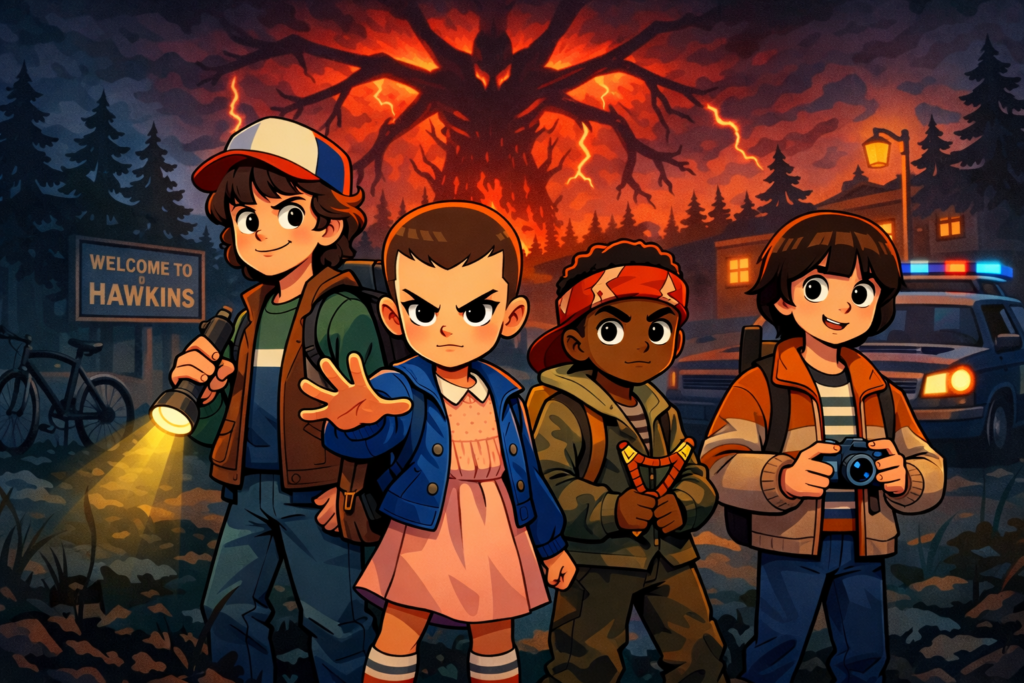
After days of speculation, Birdy posted a still from the episode on Instagram with a simple caption. “Not AI Winona.” That’s it. No fancy technology. Just a real person who happens to look remarkably like young Winona Ryder.
The comments on her post tell the whole story. One fan wrote they “thought they de-aged Winona somehow.” Another said, “Bruhhh you two are identical. I literally thought it was AI.”
Sound familiar? That’s exactly how I felt watching it.
Why We All Assumed Stranger Things Used AI Deepfake Tech
Deepfake technology has gotten scary good in Hollywood. Netflix has experimented with AI-assisted production, and studios routinely use de-aging on actors. So “probably AI” felt like a reasonable first guess when something looks too perfect on screen.
We’ve seen deepfakes used in movies to de-age actors, bring back deceased performers, and create scenes that would have been impossible a decade ago.
Netflix has experimented with AI-assisted production across various projects. So when fans saw a teenage Joyce who looked exactly like 1980s Winona Ryder, “probably AI” was actually a reasonable guess.
The problem is we’ve hit a point where we’re defaulting to AI explanations for things that might just be talent. Good casting. Skilled makeup. A lucky genetic resemblance.
I wrote about this same phenomenon with the McDonald’s AI Christmas ad backlash. People are so primed to spot AI that we’re seeing it everywhere, even when it’s not there.
Winona Ryder Actually Hates AI
Winona Ryder told ELLE magazine she “loathes” AI. And the 2023 SAG-AFTRA strike included major provisions about AI likeness protections. So it’s almost poetic that fans assumed her younger self was digitally recreated when the Duffer Brothers went old-school with casting.
She’s not alone. Many actors have spoken out against AI technology in Hollywood, around concerns about their likenesses being used without consent. The 2023 SAG-AFTRA strike included major provisions about AI use.
So there’s something almost poetic about fans assuming Winona was digitally recreated when the production actually went the old-fashioned route. Finding someone who naturally fit the part.
What This Says About Our AI Assumptions
We’ve reached a cultural tipping point where “must be AI” has become our default reaction to anything that looks too good. That means talented performers like Birdy have to prove they’re real instead of the other way around.
This whole situation captures something important about where we are right now. We’ve gotten so used to AI being everywhere that we’re starting to see it even when it’s not there.
That’s not entirely bad. Being skeptical about what’s real versus generated is probably healthy. Deepfakes are a real concern, and questioning what we see makes sense. I talk about this more in our guide on getting started with AI tools.
But there’s also something lost when our default assumption is “computer made this” rather than “person made this.” Birdy gave a performance good enough that millions of viewers were convinced it couldn’t be real. That’s impressive. Her work deserves recognition as actual acting, not as a tech demo.
The Honest Limitations of Spotting AI
Traditional AI tells like weird hands, inconsistent lighting, and hair artifacts are disappearing fast. Context matters more now. Whether the production announced AI use is a more reliable indicator than pixel-level analysis, since major studios typically disclose significant AI or de-aging technology.
Telling AI from reality is getting harder every month. The tells that worked six months ago don’t always work now.
You can look for weird hand movements, inconsistent lighting, and strange behavior in hair. But those issues are disappearing fast. The Stranger Things situation proves that even careful viewers (myself included) can’t always tell what’s real.
Context matters more than pixel-peeping. Major productions typically disclose when they use significant AI or de-aging technology. It’s often a selling point. When there’s no announcement, the old-fashioned explanation is usually correct.
Common Questions About AI in Stranger Things
Did Stranger Things Season 5 use AI deepfake technology?
No. The teenage Joyce character was played by a real actress named Birdy who naturally resembles young Winona Ryder. She confirmed this on Instagram with the caption “Not AI Winona.”
Why did fans think the Stranger Things scene was AI?
The resemblance between Birdy and young Winona Ryder was so striking that viewers assumed it had to be digitally created. We’ve reached a point where assuming AI is often our first instinct when something looks too perfect.
What does Winona Ryder think about AI?
Winona Ryder has publicly said she “loathes” AI in a recent ELLE interview. Many actors share concerns about AI being used to replicate their likenesses without consent.
How can you tell if video content is AI-generated?
Look for unnatural hand movements, inconsistent lighting, and strange artifacts in hair or jewelry. But honestly, context matters more. Check if the source has announced AI use, which major productions typically do.
The Bottom Line
Sometimes the most impressive thing isn’t AI at all. It’s just a talented person doing their job really well.
Birdy earned her moment in Stranger Things the same way actors have always earned roles. By being right for the part. The fact that she looked so convincing that millions assumed she must be fake is honestly the best compliment she could get.
And maybe that’s a good reminder for all of us. Yes, AI is changing everything. Yes, we should stay skeptical. But sometimes the answer to “is this AI?” is simply no.
If you’re planning a Stranger Things binge this weekend, a Fire TV Stick 4K Max makes the experience a lot better. Just don’t spend the whole time wondering what’s real and what’s AI.
Related reading: McDonald’s AI Christmas Ad Backlash | AI Video Creation Guide | New to AI? Start here
This post contains affiliate links. If you purchase through these links, we may earn a small commission at no extra cost to you.
WHO WROTE THIS
Moses Smith. I write Everyday AI for people who aren’t engineers. I go try the tools, then tell you honestly whether they were worth it. Sometimes the answer is no, and that’s kind of the point.
This blog is free and has no ads. If it saved you some time, you can buy me a coffee.