ℹ️ Quick Answer: TikTok’s AI age verification system analyzes scrolling behavior, posted content, and profile details to flag users suspected of being under 13 across Europe. Flagged accounts go to human moderators for review. If suspended, you can appeal through a Yoti face scan, credit card check, or government ID upload.
📋 WHAT’S INSIDE
- So How Does This Thing Actually Work
- You Got Flagged. Now What?
- Is This Yoti Face Thing Actually Accurate Though
- What Happened in the UK Test
- Wait What About That Massive Fine
- The Privacy Stuff That Bugs Me
- What European Regulators Actually Want
- Where I Land on All This
- Questions People Keep Asking About TikTok Age Verification
TikTok’s rolling out AI age verification across Europe this month. The system analyzes how you scroll, what you post, your profile details. Basically watches your behavior to guess if you’re under 13. Get flagged? You can appeal with a face scan, credit card, or government ID.
I’m an AI enthusiast. Use it every single day. Finance tracking, coding, research, productivity stuff. It’s woven into how I work at this point.
But man, the news cycle around AI gets exhausting. It’s always something negative. Privacy violations. Job displacement fears. Deepfake scandals. Lawsuits. You scroll through tech news and it’s doom doom doom.
The one thing that bugs me? Companies slapping “AI-powered” on features that worked fine before, then using that as an excuse to jack up the price. If you know, you know. That drives me up a wall.
So when I read about TikTok using AI for age verification? Honestly felt like a breath of fresh air. AI actually being used to protect kids online instead of just existing as a marketing buzzword. That’s the kind of story I want to see more of. When it works. Will it work? Let’s dig into that.
So How Does This Thing Actually Work
TikTok’s AI system analyzes three signals (profile info, posted content, and behavioral patterns like scrolling and engagement habits) to generate a risk score that human moderators then review before suspending suspected underage accounts.
There are three signals that AI will flag.
Your profile stuff. When you created the account, what age you said you were, bio details. Pretty standard.
Makes sense, right? A 10-year-old’s content looks different than a 25-year-old’s. (Usually. I’ve seen some questionable adult content too but that’s a different conversation.)
And then, this is the interesting part, behavioral signals. How you scroll. What makes you stop scrolling. What you engage with. Comment patterns. The whole vibe of how you use the app.
Clicking “I’m 18” and moving on never worked anyway. This goes way beyond that.
ℹ️ How It’s Different: Flagged accounts don’t get auto-nuked. The AI generates a risk score, sends it to actual humans, and they decide. Real people making the final call. Which addresses probably the biggest complaint everyone has about AI moderation, that it makes stupid decisions with no oversight.
TikTok says they’re already booting around 6 million underage accounts every month globally. This adds another layer on top of that.
You Got Flagged. Now What?
Suspended users get three appeal options: a Yoti face scan that takes about one second and deletes the image immediately, credit card verification through your issuer, or government ID upload that typically takes over 24 hours.
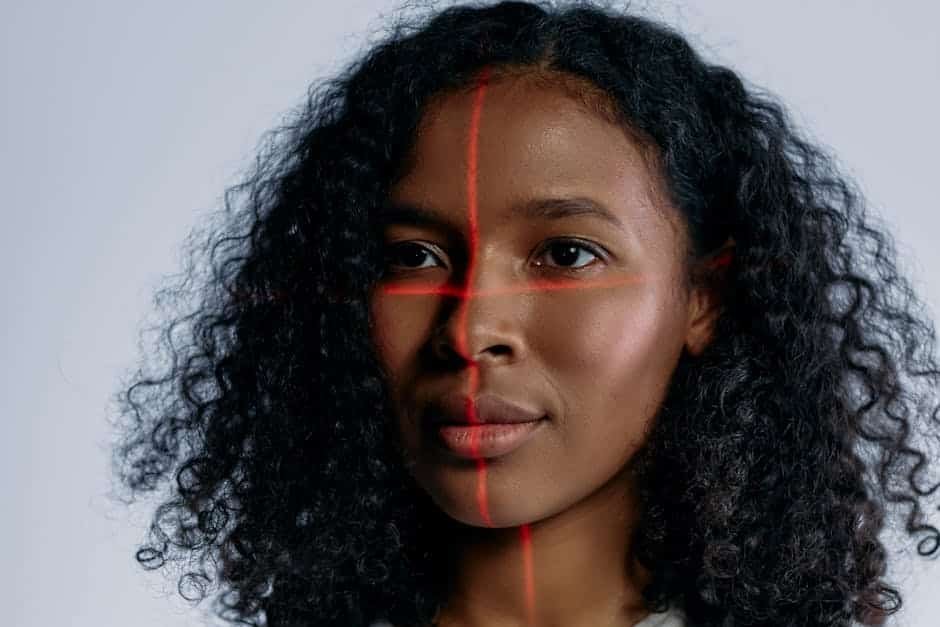
Three options if your account gets suspended after a moderator looks at it.
The face scan thing through Yoti. Takes about a second. Their AI guesses your age from a selfie, then deletes the image right away. Most people will probably pick this one because it’s fast and you’re not handing over your passport.
Credit card verification. Your card issuer confirms you’re old enough to have one. Seems clunky to me but okay.
Government ID upload. Passport, driver’s license, whatever. This one takes more than 24 hours usually. And honestly? Uploading my license to TikTok feels weird even if they promise to delete it.
Is This Yoti Face Thing Actually Accurate Though
Yoti’s September 2024 data shows their facial age estimation is off by about 1.3 years on average for teens aged 13 to 17, with a 99.3% true positive rate and consistent accuracy across different ethnicities.
Fair question. I was skeptical too.
So Yoti published their September 2024 numbers. For kids 13-17, they’re off by about 1.3 years on average. True positive rate of 99.3%, meaning they correctly identify someone as under 21 almost every time.
The cross-demographic testing showed pretty consistent results across different ethnicities. Which matters a lot because, and let’s be real here, AI facial recognition has had some embarrassing bias problems historically. Remember those photo apps that couldn’t recognize darker skin tones? Yeah.
✅ Privacy Win: They don’t keep your face. Image gets deleted immediately after the check. The UK’s Information Commissioner’s Office looked at this and said it doesn’t count as storing biometric data under GDPR.
What Happened in the UK Test
TikTok ran the AI age verification system in the UK for a full year before the European rollout, catching thousands of underage accounts that existing detection methods had missed.
Before rolling this out everywhere, TikTok ran it in the UK for a year.
Found thousands of underage accounts their existing systems missed. Enough that they decided to expand across Europe. Also hired more human moderators to handle the flagged cases.
⚠️ Grain of Salt: There’s no independent audit of these numbers. We’re taking TikTok’s word for it. They did work with Ireland’s Data Protection Commission during development, which suggests somebody was watching over their shoulder. But still.
Wait What About That Massive Fine
The €530 million GDPR fine TikTok received in May 2025 was for sending European user data to China without adequate protections, not for the age verification system itself.
You might’ve seen headlines about TikTok getting hit with a €530 million GDPR fine and thought it was connected to this age stuff.
It’s not. Different thing entirely.
The May 2025 fine broke down like this. €485 million for sending European user data to China without proving it would be protected properly there. And €45 million because their privacy policy was vague about Chinese staff accessing user data.
Oh, and here’s a fun detail that came out during all that. TikTok initially told regulators that European user data wasn’t stored in China. Then in April 2025 they were like “actually we just discovered some of it was stored there after all.” Whoops.
There’s also a separate €5 million fine from France in 2023 about cookie consent buttons. Because apparently that’s a thing.
Point is. TikTok has serious regulatory problems in Europe. But this age verification system is partly their response to all that pressure. Trying to look like they’re taking child safety seriously.
The Privacy Stuff That Bugs Me
The behavioral analysis data TikTok collects for age detection could theoretically be repurposed for ad targeting, and the appeal process routes your biometric data through a separate company (Yoti) with its own privacy policies.
Okay so I’m cautiously optimistic about this. But some things still nag at me.
How long do they keep all those behavioral signals they’re analyzing? Could that data get repurposed for ads later? “We noticed you engage with content like a teenager so here’s some acne cream.” I’m probably being paranoid but also… am I?
⚠️ False Positive Risk: If you’re an adult who’s really into anime or gaming or silly comedy content (stuff that skews younger), are you gonna get flagged constantly? The human review should catch those errors but who knows how consistent these moderators actually are.
And the appeal process funnels your face through Yoti. They delete it immediately, sure. But you’re trusting a company that’s not TikTok, operating separately, with different policies and oversight. Feels like a lot of companies handling your biometric data for one app.
TikTok says they built this “specifically for Europe to comply with the region’s regulatory requirements.” No public Data Protection Impact Assessment though. Would be nice to see the receipts.
What European Regulators Actually Want
The EU’s Digital Services Act distinguishes between age verification (document-based proof) and age estimation (behavioral or biometric guessing), and the European Parliament passed a non-binding November 2025 resolution calling for a social media minimum age of 16.
The Digital Services Act makes a distinction between age verification (proving identity with documents) and age estimation (guessing age from behavior or face scans). TikTok’s doing both.
The European Commission has acknowledged that estimation methods “can complement age verification” but also warned that “false negatives will be inevitable.” Hence the appeal pathway. They know this isn’t perfect.
ℹ️ Watch This Space: The European Parliament passed a non-binding resolution in November 2025 calling for social media minimum age of 16 across the EU. TikTok’s current minimum is 13. If that becomes actual law? They’ll need to redesign this whole system again.
Where I Land on All This
TikTok’s staged approach (AI flags, humans decide) is real progress over “click to confirm you’re 18” checkboxes, even if the company’s motivation is regulatory pressure rather than genuine child safety concern.
I’m not naive enough to think TikTok is doing this out of genuine concern for children. C’mon. They’re responding to regulatory pressure. The €530 million fine, Australia straight-up banning social media for under-16s, the UK’s Online Safety Act, Ireland’s Online Safety Code. Platforms are actually facing consequences now. Wild concept.
But motivation aside? The outcome matters more to me.
AI being used to protect kids instead of just maximize engagement time. That’s progress. The staged approach (AI flags, humans decide) shows they maybe learned from those early automated moderation disasters where innocent people got banned and nobody could reach a human to fix it.
Is it perfect? Nah. The privacy questions are legit. The lack of independent audits bothers me. And European regulators might force even stricter changes soon.
But compared to clicking “I’m 18” on a popup that nobody ever reads? This is at least trying to solve the actual problem. And as someone who wants to see AI do good things in the world, that’s refreshing.
Questions People Keep Asking About TikTok Age Verification
How does TikTok’s AI figure out if someone’s underage?
It looks at three things: your profile info, the videos you post, and how you behave in the app. Scrolling patterns, what you engage with, comment habits. Flagged accounts go to human moderators who make the final call, not automatic bans.
What if I get wrongly flagged as under 13?
Three appeal options. Yoti face scan (takes one second, image deleted immediately). Credit card verification through your issuer. Or government ID upload, which takes longer than 24 hours usually.
Is that Yoti face scan thing actually reliable?
Their numbers say they’re off by about 1.3 years on average for teens 13-17. 99.3% true positive rate. Tested consistently across different demographics. Not perfect but pretty decent for this kind of tech.
Does TikTok keep my face photo after I verify?
Yoti handles the face scan, not TikTok directly. They delete the image immediately after estimating your age. UK regulators confirmed this doesn’t count as storing biometric data under GDPR.
Which countries have this new system?
Rolling out across all EEA countries (the 27 EU member states plus Iceland, Liechtenstein, Norway), the UK, and Switzerland starting January 2026.
Related Stuff Worth Reading
- Start Here: Your Guide to Using AI in Everyday Life
- Is OpenAI’s $200 Billion Bubble About to Burst?
- New York Signs AI Safety Bill: Why the RAISE Act Matters
- Who Won the AI Race in 2025?
WHO WROTE THIS
Moses Smith. I write Everyday AI for people who aren’t engineers. I go try the tools, then tell you honestly whether they were worth it. Sometimes the answer is no, and that’s kind of the point.
This blog is free and has no ads. If it saved you some time, you can buy me a coffee.