ℹ️ Quick Answer: The OpenAI $110 billion funding round is the largest private fundraise in history. Amazon invested $50 billion, NVIDIA $30 billion, and SoftBank $30 billion, valuing OpenAI at $730 billion. The money isn’t going toward ChatGPT upgrades. It’s funding massive AI infrastructure including custom chips, 10 gigawatts of data centers, and $600 billion in planned compute spending by 2030.
What’s inside
- What $110 Billion Actually Buys
- Why Each Investor Wrote the Check
- The Part Nobody’s Talking About
- Should You Be Worried or Excited?
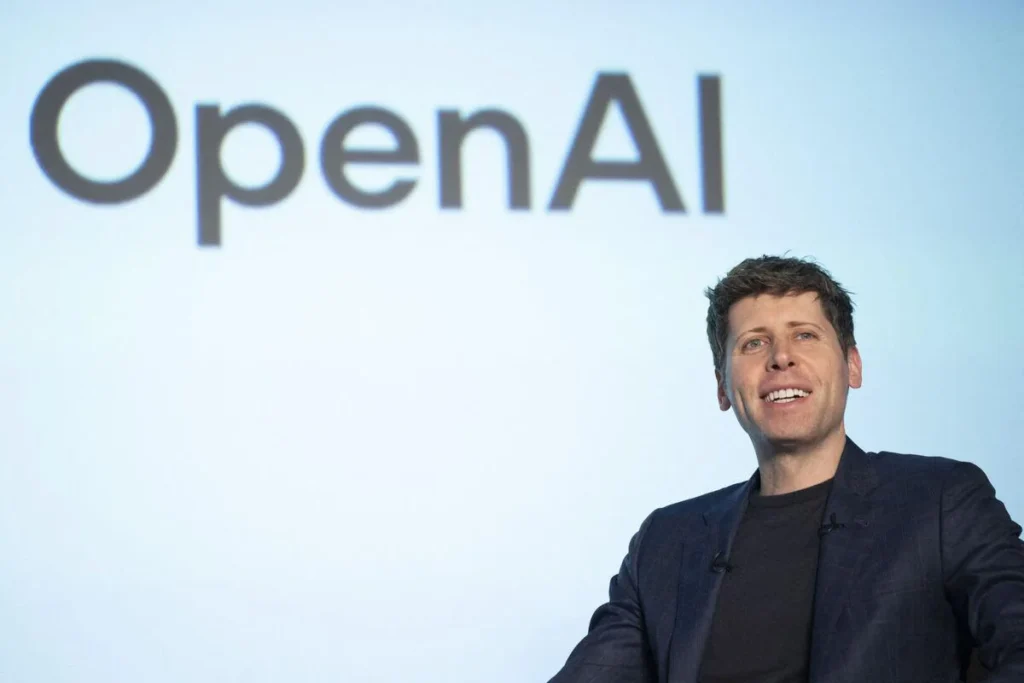
When I saw Sam Altman’s tweet yesterday, my first thought was probably the same as yours. That’s a wild amount of money for a company that makes a chatbot.
Then I looked at where the money is actually going. And I realized I was asking the wrong question entirely.
What the OpenAI $110 Billion Funding Round Actually Buys
The money funds physical AI infrastructure at a scale most people can’t picture. We’re talking gigawatts of data centers, custom silicon, and enough compute power to rival a small country’s electrical grid.
What got buried beneath the headline number is this. Amazon didn’t just write a $50 billion check for OpenAI stock. The deal bundles a $100 billion cloud contract making AWS the exclusive distributor for OpenAI’s enterprise agent platform called Frontier. OpenAI also committed to consuming 2 gigawatts of Amazon’s custom Trainium chip capacity.
NVIDIA’s $30 billion comes with a partnership to deploy 10 gigawatts of NVIDIA systems. The first gigawatt ships on NVIDIA’s new Vera Rubin platform in the second half of 2026.
On top of all that, OpenAI announced a separate deal with Broadcom to design its own custom AI chips. First batch starts production late 2026 with a target of 10 gigawatts by 2029.
If you’re keeping count, that’s 22 gigawatts of AI computing power planned across three different chip architectures. For perspective, a single gigawatt powers roughly 750,000 homes. That’s enough juice for about 16.5 million households. For a “chatbot company.”
Why Amazon, NVIDIA, and SoftBank Each Wrote the Check
Each investor is buying something different. Amazon gets distribution control. NVIDIA gets guaranteed chip demand. SoftBank gets the final piece of an integrated AI stack built on ARM.
Amazon’s play is about AWS. By becoming the exclusive cloud distributor for OpenAI Frontier, Amazon guarantees that every enterprise deploying OpenAI’s most advanced agent tools routes through AWS infrastructure. Amazon is also getting custom AI models for Alexa. The kicker? Only $15 billion of Amazon’s $50 billion lands upfront. The remaining $35 billion is contingent on OpenAI either achieving AGI or completing an IPO by year’s end. Amazon is spending so much on AI right now that their $200 billion capex plans spooked Wall Street just weeks ago.
NVIDIA’s investment is more straightforward and more circular. They invest $30 billion in OpenAI. OpenAI uses that money to buy NVIDIA chips. NVIDIA books the revenue. Bloomberg published an entire investigation comparing these arrangements to dotcom era vendor financing. Whether you call it a flywheel or a house of cards depends on whether the end user demand shows up.
SoftBank’s CEO Masayoshi Son has said publicly that 60% of SoftBank’s assets are now oriented toward artificial superintelligence. He believes ASI (technology 10,000 times smarter than humans) arrives within a decade. This $30 billion brings SoftBank’s total OpenAI investment to $64.6 billion. Combined with their majority stake in ARM and their role in the Stargate data center project, Son is assembling an integrated stack from chips to data centers to models.
The Part Nobody’s Talking About the OpenAI $110 Billion Funding Round

OpenAI isn’t scaling up a chatbot. It’s building infrastructure that looks more like a power utility than a software company.
Their internal target is $600 billion in total compute spending by 2030. That number is larger than the GDP of Sweden. The Stargate Project alone plans nearly 7 gigawatts of data center capacity across five U.S. sites with over $400 billion in investment over three years.
This is the part that reframed the whole story for me. When you see $110 billion and think “chatbot company,” the number seems insane. When you see $110 billion and think “the company building the power grid for artificial intelligence,” it starts to make a different kind of sense. I wrote about whether all this AI spending qualifies as a bubble last year, and the infrastructure angle is what keeps pulling me toward “no.”
These investors aren’t betting on ChatGPT subscriptions. They’re betting that AI compute becomes as fundamental as electricity, and they want to own the infrastructure layer before everyone else figures that out. NVIDIA’s upcoming Rubin platform promises to cut AI costs by 90%, which only accelerates demand.
Should You Be Worried or Excited?
Both. The infrastructure buildout could make AI tools cheaper and better for everyone. But OpenAI is projecting $14 billion in losses this year and its margins are getting worse, not better.
The bull case is straightforward. More infrastructure means lower costs per query, which means better AI tools at lower prices for regular people. Competition between Amazon’s Trainium, NVIDIA’s Vera Rubin, and OpenAI’s custom Broadcom chips should drive costs down even further.
The bear case is real too. OpenAI’s gross margins dropped from 40% in 2024 to 33% in 2025 even as revenue tripled to $20 billion. HSBC analysts estimate OpenAI won’t turn profitable until 2029 at the earliest and faces a $207 billion funding gap to get there. Those numbers put the $200 billion bubble question in sharper focus.
I don’t think this is a bubble about to pop. But I do think we’re watching something most people haven’t fully processed yet. The biggest companies on Earth are spending more money than most countries have, building physical infrastructure for a technology that’s three years old in its current form.
Whether that’s visionary or reckless probably depends on whether AI agents actually replace enough human work to justify the investment. Nobody knows that answer yet. Not even the people writing the checks.
Related reading: What Is the AI Bubble? | Big Tech AI Spending Hits $650 Billion | New to AI? Start here
WHO WROTE THIS
Moses Smith. I write Everyday AI for people who aren’t engineers. I go try the tools, then tell you honestly whether they were worth it. Sometimes the answer is no, and that’s kind of the point.
This blog is free and has no ads. If it saved you some time, you can buy me a coffee.