I had my identity stolen years ago. Someone opened credit cards in my name, made purchases, left me to clean up the mess.
The calls. The paperwork. The paranoia every time I checked my bank account. I never want to go through that again.
Now I get texts from my bank: “Was this you?” Sometimes it’s a legitimate charge. Sometimes it catches something sketchy before it becomes a problem. But what’s actually happening behind those alerts?
AI fraud detection for bank accounts uses machine learning to build a profile of YOUR normal behavior and flag anything that doesn’t match. It monitors every transaction in milliseconds, looking for patterns that suggest someone else might be using your card.
The quick answer: Your bank is already using AI to protect you. To maximize that protection: enable transaction alerts for every purchase, turn on two-factor authentication, set up biometric login, and respond immediately when your bank asks “Was this you?” Your quick response helps train the AI to better recognize your patterns.
This is Part 18 of our 20-part series on how AI can improve your life in 2026. See all parts →
What Is AI Fraud Detection for Bank Accounts?
AI fraud detection uses machine learning to build a detailed profile of your normal spending behavior and flags anything that doesn’t match, going far beyond simple rules like “flag purchases over $500.”
AI fraud detection for bank accounts uses machine learning systems that monitor your accounts 24/7, looking for anything unusual. Instead of simple rules like “flag any purchase over $500,” modern AI builds a detailed profile of YOUR normal behavior and alerts you when something doesn’t match.
Think of it like a security guard who actually knows you. They know you usually shop at certain stores, spend within certain ranges, and use your card in certain cities. When someone tries to use your card in a way that doesn’t fit your pattern, the AI notices immediately.

How AI Fraud Detection for Bank Accounts Spots Suspicious Activity
Every card swipe gets a risk score in milliseconds based on dozens of factors including location, device, amount, merchant type, and time of day, with high-risk transactions blocked instantly and medium-risk ones triggering “Was this you?” texts.
Here’s what’s actually happening behind the scenes every time you swipe your card:
Behavior Profiling
The AI builds a baseline of your “normal.” What times do you usually shop? Which merchants? What’s your typical transaction size? Do you use mobile payments or physical cards more often? After a few weeks, the system knows your habits better than you do.
Real-Time Risk Scoring
Every transaction gets a risk score in milliseconds. Low risk passes instantly. Medium risk might trigger a text asking “Was this you?” High risk gets blocked on the spot. The AI considers dozens of factors: location, device, amount, merchant type, time of day, and how this transaction compares to your history.
Pattern Recognition
AI systems also look for known fraud patterns. Small “test” charges before a big one. Rapid successive transactions. Purchases at high-fraud merchant categories. Card-not-present transactions from unusual IP addresses. These patterns trigger extra scrutiny.
Common Fraud Scenarios AI Catches
AI fraud detection catches card-not-present fraud from data breaches, account takeover attempts from new devices, small “test” charges that precede large fraudulent purchases, and unauthorized subscription sign-ups.
Let me walk you through real scenarios where AI fraud detection shines:
Card-Not-Present Fraud
Someone gets your card number from a data breach and tries to buy a gaming console online. The AI notices: different device, different location, different merchant type than your usual purchases. Blocked before it processes.
Account Takeover
A scammer gets your login credentials through phishing. They log in from a new device in a different state, immediately try to change your password, and initiate a transfer to an unknown account. The AI flags every single one of these actions as high-risk and locks things down.

Test Charge Fraud
Fraudsters often make small purchases ($1-5) to verify a stolen card works before making bigger ones. AI systems catch these unusual small charges at unfamiliar merchants and flag them before the big hit comes.
Subscription and Recurring Charge Fraud
Someone signs you up for subscriptions you didn’t authorize. The AI notices new recurring charges from merchants you’ve never interacted with and alerts you.
How to Work With Your Bank’s AI (Not Against It)
Enable transaction alerts on every purchase through Capital One, Chase, or Bank of America apps, set travel notices before trips, keep contact info current, and respond immediately to “Was this you?” alerts to train the AI on your patterns.
Here’s something most people don’t realize: you can actually help the AI protect you better. And you can reduce those annoying false alarms when you’re traveling or making unusual purchases.
Enable All Notifications
Turn on real-time alerts for every transaction. Yes, every single one. Most bank apps like Capital One, Chase, and Bank of America let you get push notifications instantly. This means if fraud happens, you know within seconds, not days. And your quick “not me” response helps the AI learn.
Set Travel Notices
Traveling to another city or country? Tell your bank. Most apps have a “travel notification” feature. This prevents the AI from blocking your legitimate purchases abroad because it thinks your card was stolen.
Keep Contact Info Current
If your phone number or email is outdated, fraud alerts can’t reach you. Make sure your bank has your current info so those “Was this you?” texts actually get to you.
Respond to Alerts Quickly
When you get a “Was this you?” alert, respond immediately. Confirming legitimate transactions helps the AI learn your patterns better. Denying fraudulent ones stops the attack instantly.
Practical Security Checklist
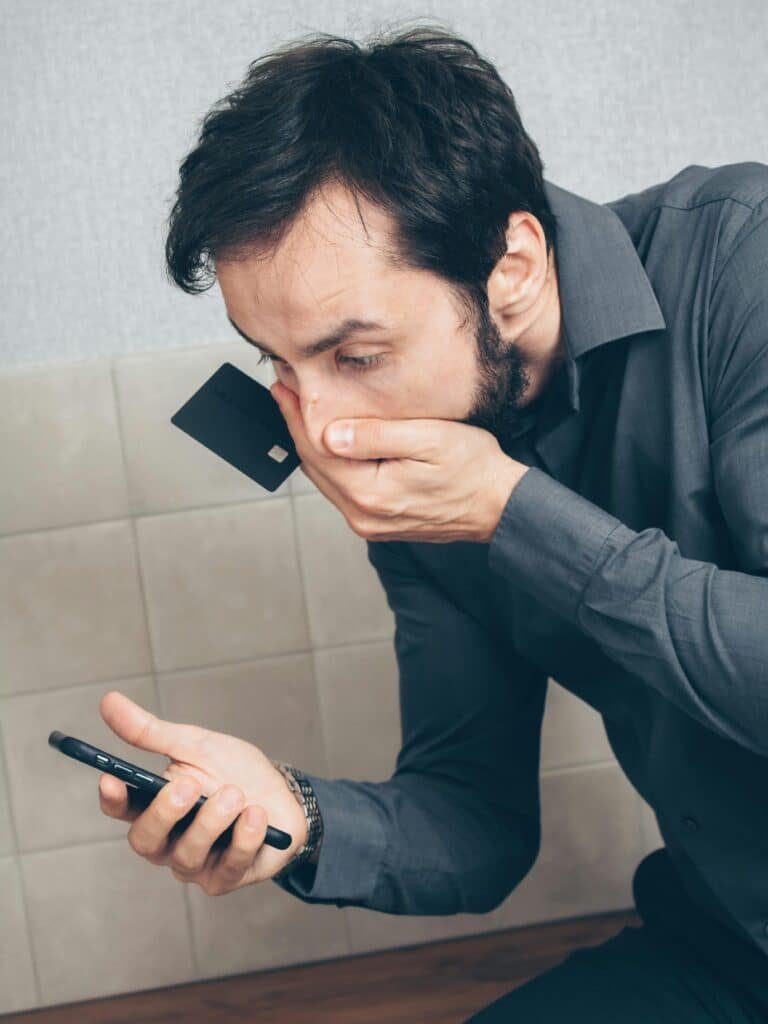
Enable two-factor authentication and biometric login on all bank accounts, set transaction alerts for every purchase, and if fraud happens, lock your card immediately through the app and report to the FTC’s IdentityTheft.gov.
Beyond working with AI, here are concrete steps to protect your accounts:
Must-Do Settings
- Enable two-factor authentication (2FA) on all bank accounts
- Turn on biometric login (Face ID, fingerprint) where available
- Set up transaction alerts for all purchases
- Enable card lock/freeze features in your banking app
- Set withdrawal and spending limits where possible
Weekly Habits
- Review your transactions for anything unfamiliar
- Check for small charges you don’t recognize
- Keep your banking apps and phone OS updated
- Avoid banking on public Wi-Fi
If You Suspect Fraud
- Lock your card immediately through your banking app
- Call your bank’s fraud line (save this number in your contacts)
- Dispute unauthorized charges
- Change your online banking password
- Check for other accounts that might be compromised
- Report to the FTC’s IdentityTheft.gov if it’s serious
The Honest Limitations of AI Fraud Detection
AI can’t catch social engineering scams where you willingly send money, brand new attack methods may slip through until models retrain, and the system trades some privacy for protection by analyzing your detailed transaction behavior.
AI fraud detection for bank accounts isn’t perfect. Here’s what it struggles with:
Social engineering attacks. If you willingly send money to a scammer (romance scams, tech support scams, impersonation), the transaction looks legitimate to the AI. You authorized it. This is why scam awareness matters just as much as technical protection.
New fraud patterns. AI learns from historical data. Brand new attack methods might slip through until the models are retrained. Human review teams still play an important role.
False positives. Sometimes the AI blocks legitimate purchases. It’s annoying, but honestly? I’d rather deal with occasional false alarms than have fraud go undetected.
Privacy trade-offs. These systems work because they analyze your behavior in detail. If that makes you uncomfortable, just know the focus is on transaction patterns, not the content of what you buy.
Common Questions About AI Fraud Detection for Bank Accounts
Can AI completely stop fraud on my accounts?
No system is 100% perfect, but AI significantly reduces successful fraud. Studies show AI-based systems catch over 95% of fraud attempts. Combined with your own good habits (strong passwords, 2FA, checking statements), you’re well-protected.
Why did my bank decline a legitimate purchase?
The AI flagged something unusual about the transaction. Common triggers: large amount, new merchant type, different location, or a pattern that looks like fraud. Confirming the alert teaches the AI that this type of purchase is normal for you.
Does AI fraud detection mean my bank watches everything I buy?
Banks already see your transactions to process them. AI uses this existing data to find suspicious patterns. It’s looking at behavior signals (amounts, timing, locations), not judging your purchases. And it’s regulated by banking privacy laws.
What should I do if fraud slips through?
Report it immediately. Lock your card, call your bank, dispute the charges. Most banks have zero-liability policies for unauthorized transactions. Your report also helps train the AI to catch similar fraud in the future.
Related Reading
If you found this helpful, check out these related posts:
- How to Use ChatGPT for Personal Finance
- Part 17: AI Investment Portfolio Optimization
- Start Here to see all our AI guides for beginners
Series Navigation: ← Part 17: AI Portfolio Optimization | Series Hub | Part 19: AI Travel Itineraries →
WHO WROTE THIS
Moses Smith. I write Everyday AI for people who aren’t engineers. I go try the tools, then tell you honestly whether they were worth it. Sometimes the answer is no, and that’s kind of the point.
This blog is free and has no ads. If it saved you some time, you can buy me a coffee.