ℹ️ Quick Answer: Tesla has about 30 robotaxis driving completely empty in Austin with no human safety monitor inside. The cars use camera-based AI instead of expensive LIDAR sensors, which could make them cheaper to deploy than Waymo. The safety record is concerning though, with seven crashes in six months even with human monitors present. This is still testing, not a public service.
📋 WHAT’S INSIDE
- What Tesla Robotaxi Is Actually Doing in Austin
- Why Tesla Robotaxi News Made Stock Jump
- Tesla Robotaxi Safety Questions No One Can Ignore
- How Tesla Robotaxi Compares to Waymo
- What Tesla Robotaxi Means for You
- Common Questions About Tesla Robotaxi
Empty cars are driving around Austin. No one behind the wheel. No one in the passenger seat. Just Teslas navigating traffic on their own.
This isn’t a movie. It’s happening right now.
The Tesla robotaxi program just hit its most significant milestone yet. Over the weekend, Tesla began testing Model Ys with no human safety monitor inside at all. CEO Elon Musk confirmed on X: “testing is underway with no occupant in the car.”
What Tesla Robotaxi Is Actually Doing in Austin
Tesla’s fleet of roughly 30 Model Y robotaxis in Austin graduated from having human safety monitors to driving completely empty on public roads, though Elon Musk’s promise to cover “half of the U.S. population” by year-end was quietly revised down.
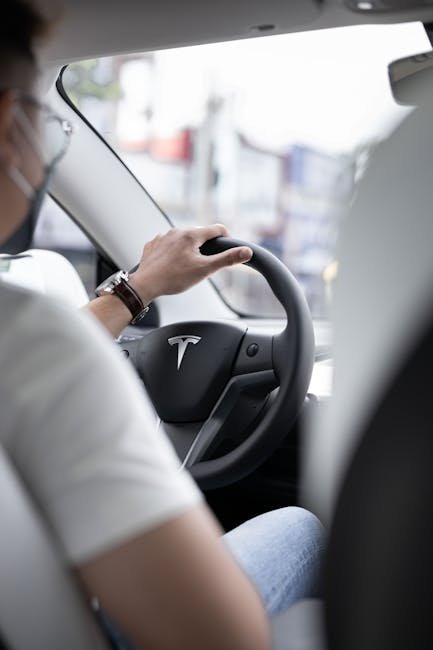
Tesla launched its robotaxi service in Austin back in June 2025. At first, safety monitors sat in the passenger seat, ready to intervene if something went wrong. In September, those monitors moved to the driver’s seat. Now, as of this weekend, the Tesla robotaxi cars are driving around completely empty.
The fleet is small, around 30 vehicles according to TechCrunch. Musk had previously claimed Tesla would cover “half of the U.S. population” by the end of 2025, but that’s been revised down to a target of roughly 60 vehicles in Austin. Still, the removal of human safety monitors is a significant milestone.
Last week, Musk said Tesla had “pretty much solved” unsupervised Full Self-Driving. That’s a bold claim given the company’s history of overpromising on autonomous driving timelines. But empty Tesla robotaxi cars on public roads is a concrete step that’s hard to dismiss.
Why Tesla Robotaxi News Made Stock Jump
Tesla shares jumped almost 5% to $481.37 on the driverless testing news, pushing the company’s valuation to $1.53 trillion as Wall Street prices in autonomous driving progress.
Tesla shares hit their highest level in nearly a year on Monday, rising almost 5% to $481.37. The company’s $1.53 trillion valuation, the highest of any automaker globally, is largely built on investor belief in its self-driving and AI ambitions rather than just selling electric vehicles.
The stock reaction shows how much Wall Street cares about autonomous driving progress. Every step Tesla takes toward a real Tesla robotaxi service adds credibility to the idea that the company isn’t just a car manufacturer but a future AI transportation giant.
Tesla Robotaxi Safety Questions No One Can Ignore
Tesla’s small Austin fleet logged seven crashes in six months even with human safety monitors present, and NHTSA reports show four crashes since September alone with details heavily redacted by Tesla.
⚠️ Safety concern: Tesla’s small test fleet has already been involved in at least seven crashes since June, according to TechCrunch. The company aggressively redacts its reports to the National Highway Traffic Safety Administration, so details are limited.
A new NHTSA report reveals four crashes since September alone.
When Business Insider tested a Tesla robotaxi in Austin back in July, the safety monitor had to intervene multiple times, including once when the car went the wrong way on a one-way street. That was with a human ready to grab the wheel.
Publicly available crash data suggests Tesla robotaxi vehicles in Austin have been involved in crashes at a significantly higher rate per mile than competitors like Waymo, even with safety monitors present. Removing those monitors raises obvious questions about what happens when things go wrong.
How Tesla Robotaxi Compares to Waymo
Alphabet’s Waymo operates 2,500+ vehicles completing 450,000 paid rides per week, while Tesla’s 30-car Austin fleet uses cheaper camera-only AI instead of Waymo’s expensive LIDAR sensors and pre-mapped streets.
Alphabet’s Waymo is the clear leader in commercial robotaxis right now. They operate more than 2,500 vehicles across major U.S. cities and completed about 450,000 paid rides per week as of November.
Tesla’s 30-odd cars in Austin are a fraction of that. But Musk isn’t backing down from the competition. He said Waymo “never really had a chance against Tesla,” positioning this as a direct battle.
The key difference is approach. Waymo uses expensive LIDAR sensors and detailed mapping of every street. Tesla robotaxi relies on cameras and AI, which is cheaper but requires the software to be smarter. If Tesla can prove its approach works safely at scale, it could deploy robotaxis far more quickly and cheaply than Waymo.
What Tesla Robotaxi Means for You
The Austin testing will determine how quickly Tesla expands its robotaxi service to other U.S. cities, and the results over the next few months will shape the future of autonomous transportation.
If you live in Austin, you might see these empty Teslas driving around. The service area has expanded across much of the greater Austin metropolitan area.
If you don’t live in Austin, this is still worth watching. Tesla’s stated goal is to expand Tesla robotaxi service to other cities. The success or failure of truly driverless testing in Austin will determine how quickly that happens.
For anyone interested in how AI is changing transportation, this is the real-world test that matters. Lab results and demo videos are one thing. Empty cars navigating actual streets with actual traffic is another. We’ll learn a lot about whether Tesla’s approach to self-driving actually works over the next few months.
Common Questions About Tesla Robotaxi
Can I ride in a Tesla robotaxi right now?
Only if you’re in Austin and part of Tesla’s limited test program. The Tesla robotaxi service isn’t publicly available yet. These empty-car tests are the step before a broader commercial launch.
Is the Tesla robotaxi completely autonomous?
Tesla is testing them without any human in the vehicle, but they’re still being monitored remotely. If something goes wrong, Tesla can intervene. The question is whether remote monitoring is enough when split-second decisions matter.
How does this compare to my Tesla’s Autopilot?
The Tesla robotaxi uses Tesla’s Full Self-Driving (Supervised) software, the same technology available to Tesla owners who pay for it. But robotaxi testing pushes it further by removing the human backup entirely. If you’ve used FSD in your own Tesla, this is the next evolution of that same system.
Should I be worried about Tesla robotaxi safety?
The crash data is concerning. Seven crashes in six months for a fleet of 30 cars is a high rate. Tesla argues the technology is improving rapidly, but until we see sustained safe operation without human monitors, skepticism is reasonable. For now, these are still test vehicles, not a proven commercial service.
Self-driving cars have been “almost here” for years. Tesla removing safety monitors from its Austin robotaxis is one of the clearest signs yet that we’re getting closer to the real thing. Whether it’s ready for prime time is the billion-dollar question Wall Street just bet on.
Related reading: Disney’s Billion Dollar OpenAI Partnership | AWS CEO on AI Replacing Junior Employees | New to AI? Start here
WHO WROTE THIS
Moses Smith. I write Everyday AI for people who aren’t engineers. I go try the tools, then tell you honestly whether they were worth it. Sometimes the answer is no, and that’s kind of the point.
This blog is free and has no ads. If it saved you some time, you can buy me a coffee.