
ℹ️ Quick Answer: AI fitness coaching apps like Tempo, Kemtai, and Onyx use your phone camera to track your body position and flag form errors as they happen. They work best for common exercises like squats, lunges, push-ups, and deadlifts. Position your phone 6 to 8 feet away with good lighting and start with lighter weights while you learn to respond to the cues.
📋 WHAT’S INSIDE
- What Is Real-Time AI Fitness Coaching?
- How AI Form Correction Actually Works
- Best AI Fitness Coach Apps for Form Correction
- Why Real-Time Form Correction Matters
- What AI Fitness Coaches Can’t Do (Yet)
- How to Get Started With AI Fitness Coaching
- Essential Gear for AI-Coached Home Workouts
- Common Questions About AI Fitness Coaching
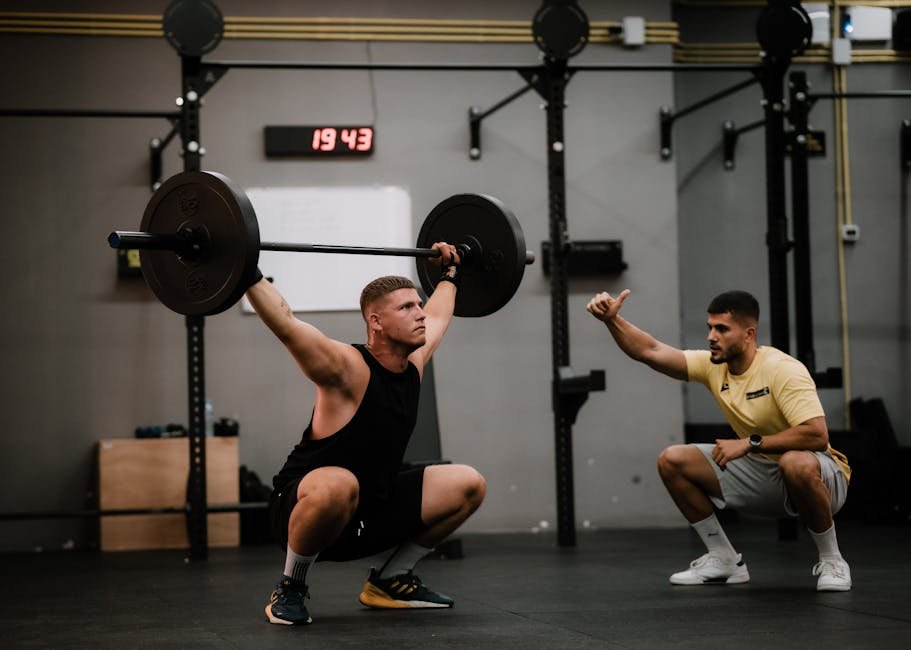
“Knees out. Deeper. Now drive.”
That’s $80 an hour for someone to watch you squat. And most people don’t have an extra $320 a month for a trainer to stand there four times a week.
I’ve been lifting since I was 9. Played college football. I know my way around a squat rack. But even I’ve developed habits I don’t notice anymore. Small compensations. Subtle imbalances. The kind of things a fresh set of eyes might catch.
AI fitness coaching apps now watch you through your phone camera and correct your form in real time. Not a summary after your workout. Actual cues while you’re in the middle of a rep.
This is Part 14 of our 20-part series on how AI can improve your life in 2026. See all parts →
What Is Real-Time AI Fitness Coaching?
Real-time AI fitness coaching uses computer vision to track your joint positions through your phone camera during exercise, delivering instant form corrections mid-rep rather than post-workout summaries.
Real-time AI fitness coaching means software that analyzes your movement as you exercise and delivers instant feedback. Not a summary after your workout. Not a score when you’re done. Actual corrections while you’re in the middle of a rep.
This is different from basic fitness trackers that count steps or estimate calories. Those tools tell you what happened. AI fitness coaches tell you what you’re doing wrong and how to fix it before the rep is over.
The technology uses computer vision to track your body’s joint positions through your phone or laptop camera. It maps your skeleton in real time, comparing your movement to the ideal form for each exercise. When you deviate from that ideal, it triggers a correction.
How AI Form Correction Actually Works
AI form correction runs through four stages in milliseconds. Pose estimation maps your skeleton’s key joints 30 to 60 times per second, movement analysis compares your angles to ideal form, error detection flags deviations beyond safe thresholds, and real-time feedback delivers audio or visual cues before the next rep.
Here’s what happens behind the scenes when you use an AI fitness coach.
Pose estimation. The app uses machine learning models trained on thousands of exercise videos to identify your body’s key points, like shoulders, hips, knees, ankles, and spine. It tracks these points frame by frame, usually 30 to 60 times per second.
Movement analysis. The AI compares your joint angles and positions to the correct form for the exercise you’re doing. For a squat, it might check whether your knees are tracking over your toes, whether your back is neutral, and whether you’re hitting proper depth.
Error detection. When your form deviates beyond acceptable thresholds, the system flags it. Maybe your squat depth is 2 inches too shallow, or your knees are collapsing inward by 15 degrees.
Real-time feedback. The app delivers a correction through audio cues (“Go deeper”), visual overlays (highlighting your knees in red), or both. The best systems time these cues so they don’t disrupt your rhythm but still catch errors before they compound.
Best AI Fitness Coach Apps for Form Correction
The top AI fitness coaching apps in 2026 are Tempo (3D sensor tracking for strength training), Kemtai (browser-based form correction with corporate wellness options), Onyx (iPhone-focused HIIT and circuit training), and Gymini AI (dedicated home gym coaching).
Several apps now offer real-time form feedback. Here are the ones worth knowing about.
Tempo
Tempo uses 3D sensors and AI to track your body during strength workouts. Originally a smart home gym system, Tempo now offers an app-only version that uses your phone’s camera. It provides real-time feedback on form, tempo, and rep quality for exercises like squats, deadlifts, and presses. The system counts reps automatically and alerts you when form breaks down.
Kemtai
Kemtai offers AI-powered personal training through any device with a camera. It provides real-time form corrections with visual and audio cues, adapts workouts based on your performance, and tracks your progress over time. The platform is used by both consumers and corporate wellness programs.
Onyx
Onyx uses your iPhone camera to count reps and provide form feedback during bodyweight and dumbbell exercises. It’s particularly good for HIIT and circuit-style workouts. The app shows you a skeleton overlay of your body so you can see what the AI sees.
Gymini AI
Gymini AI focuses specifically on home gym workouts, making it ideal for people who have equipment at home but no trainer to watch their form. It’s designed for those who want AI coaching without needing a full gym setup.
Why Real-Time Form Correction Matters
Real-time form correction prevents the accumulated joint stress from hundreds of bad-form reps that causes most gym injuries, while also improving muscle activation per rep and giving solo exercisers the confidence to train without a spotter.
ℹ️ If you have an existing injury or chronic pain, see a physical therapist or qualified trainer before relying on AI form correction. These apps catch visible errors but can’t account for your injury history or compensations you’ve developed over time.
Getting form feedback in the moment, rather than after the fact, makes a real difference.
Injury Prevention
Most gym injuries come from accumulated stress on joints and muscles due to poor form over many workouts. A rounded lower back on deadlifts, knees collapsing on squats, or excessive forward lean on lunges might not hurt immediately. But after hundreds of reps, they lead to pain and injury. AI catches these issues before they become problems.
Better Results Per Rep
Proper form means better muscle activation. A squat with good depth and knee tracking works your glutes and quads far more effectively than a partial squat with caving knees. When AI keeps your form tight, every rep counts more. You get stronger faster with less wasted effort.
Confidence Training Alone
One of the biggest barriers to home workouts is uncertainty. Am I doing this right? Will I hurt myself? AI coaching removes that anxiety. You can train in your garage or living room with the confidence that someone is watching and will tell you if something’s off.
What AI Fitness Coaches Can’t Do (Yet)
AI fitness coaches struggle with complex or unusual movements, require specific camera positioning and good lighting, cannot feel pain or fatigue you’re experiencing, and raise privacy concerns since you’re filming yourself exercising.
I want to be honest about the limitations so you have realistic expectations.
Complex movements are harder. AI is best at recognizing common exercises like squats, lunges, push-ups, and basic lifts. Olympic lifts, unusual variations, or sport-specific movements may not be well-supported yet.
Camera angle matters. You need to position your phone where it can see your full body. Poor lighting, weird angles, or obstructed views reduce accuracy. Some exercises are harder to track than others depending on perspective.
It can’t feel what you feel. A human trainer might notice you’re favoring one side because of an old injury, or that you’re gritting through pain. AI only sees your movement. It doesn’t know about your history, your fatigue level that day, or subtle discomfort.
Privacy considerations. You’re filming yourself exercising and sending that video to servers for analysis. If this concerns you, look for apps that process video locally on your device rather than in the cloud.
How to Get Started With AI Fitness Coaching
Start by picking one app with a free trial, setting up your phone on a tripod about 6 to 8 feet away with good lighting, and running through basic squats and lunges at lighter weight to learn how the real-time cues feel before adding load.
Here’s a simple plan to try AI form correction.
Choose one app to test. Pick from the options above based on what equipment you have and what exercises you do most. Most offer free trials.
Set up your camera properly. Find a spot where your full body is visible. Good lighting helps. Put your phone on a tripod or stable surface at roughly waist height, about 6 to 8 feet away.
Start with basic movements. Try squats, lunges, and push-ups first. These are exercises most AI coaches handle well. Notice how the feedback feels and whether it matches what you know about your form.
Use lighter weights initially. When you’re learning to respond to real-time cues, reduce your usual weight. Focus on nailing the form corrections before adding load.
Review your sessions. Most apps save video clips of your workouts. Watch them afterward to see the corrections you received and whether your form improved through the session.
Essential Gear for AI-Coached Home Workouts
Four pieces of affordable gear make AI-coached home workouts work much better. A flexible phone tripod for stable camera positioning, adjustable dumbbells like the Bowflex SelectTech 552 for progressive overload, resistance bands for accessory work, and a thick exercise mat for floor exercises.
You don’t need much equipment to get started with AI fitness coaching, but a few items make a big difference.
Phone tripod. The UBeesize Flexible Mini Phone Tripod is exactly what I use for recording workouts. It has flexible legs that wrap around poles or furniture, adjusts to any angle, and includes a wireless remote so you can start recording without running back to your phone. Way better than propping your phone against a shoe.
Adjustable dumbbells. If you’re training at home, the Bowflex SelectTech 552 Dumbbells replace an entire rack of weights. They go from 5 to 52.5 pounds each, and AI apps can track your dumbbell exercises just as well as barbell movements. The investment pays off when you realize you’d need 15 pairs of regular dumbbells to match the same range.
Resistance bands. The Fit Simplify Resistance Loop Exercise Bands give you options for warm-ups, accessory work, and exercises that are tough to do with just dumbbells. AI coaches can track banded movements too, and they’re useful for correcting form issues like knee cave during squats.
Exercise mat. The BalanceFrom 1-Inch Extra Thick Yoga Mat provides cushioning for floor exercises and gives you a consistent workout space. AI apps work best when you’re in the same spot each session, and having a mat helps you position yourself correctly relative to your camera.
Common Questions About AI Fitness Coaching
Is AI form correction accurate enough to trust?
For common exercises with good camera angles, modern AI is quite accurate at catching major form errors. It’s better than guessing on your own and better than occasional glances in a mirror. For advanced lifters or unusual movements, it’s best used as a supplement to periodic human coaching.
Can AI really help prevent injuries?
Yes, by catching the form errors that lead to overuse injuries before they compound over hundreds of reps. It won’t prevent acute injuries from accidents, but it reduces the chronic stress from consistently bad mechanics.
What equipment do I need?
Usually just a smartphone with a decent camera. Some apps work with tablets or laptops too. A phone tripod or stand helps keep the camera stable at the right angle. No special sensors or equipment required for most apps.
Will AI replace personal trainers?
AI handles the repetitive, rep-by-rep analysis well. But human trainers still excel at program design, understanding your history and goals, providing motivation and accountability, and catching the subtle cues that cameras can’t see. Think of AI as making baseline coaching accessible, while human trainers add deeper personalization.
AI fitness coaching won’t replace a great trainer, but it puts quality form correction within reach for anyone with a phone and some floor space.
Related reading: Get Dynamic AI Workout Recommendations | Track Nutrition Without Manual Logging | Get Personalized Health Insights from Wearables | New to AI? Start here
← Part 13: AI Wearable Insights | All Parts | Part 15: AI Language Practice →
This post contains affiliate links. If you buy something through these links, I may earn a small commission at no extra cost to you.







Leave a Reply