ℹ️ Quick Answer: Physical AI means artificial intelligence with a body that can sense, decide, and act in the real world. You can buy robot vacuums and mowers today for $899+, and the first $20,000 humanoid robots from 1X Technologies ship to U.S. homes in 2026. The market is projected to grow from $5 billion to $68 billion by 2034.
📋 WHAT’S INSIDE
- Why Physical AI Matters Now
- What Is Physical AI?
- The Numbers Behind the Hype
- Physical AI Robots You Can Buy Right Now
- The Humanoids Are Coming in 2026
- What’s Powering This Revolution
- The Honest Challenges
- My Take: The Physical AI Future I Actually Want
- What’s Actually Worth Buying in 2026
- Questions About Physical AI
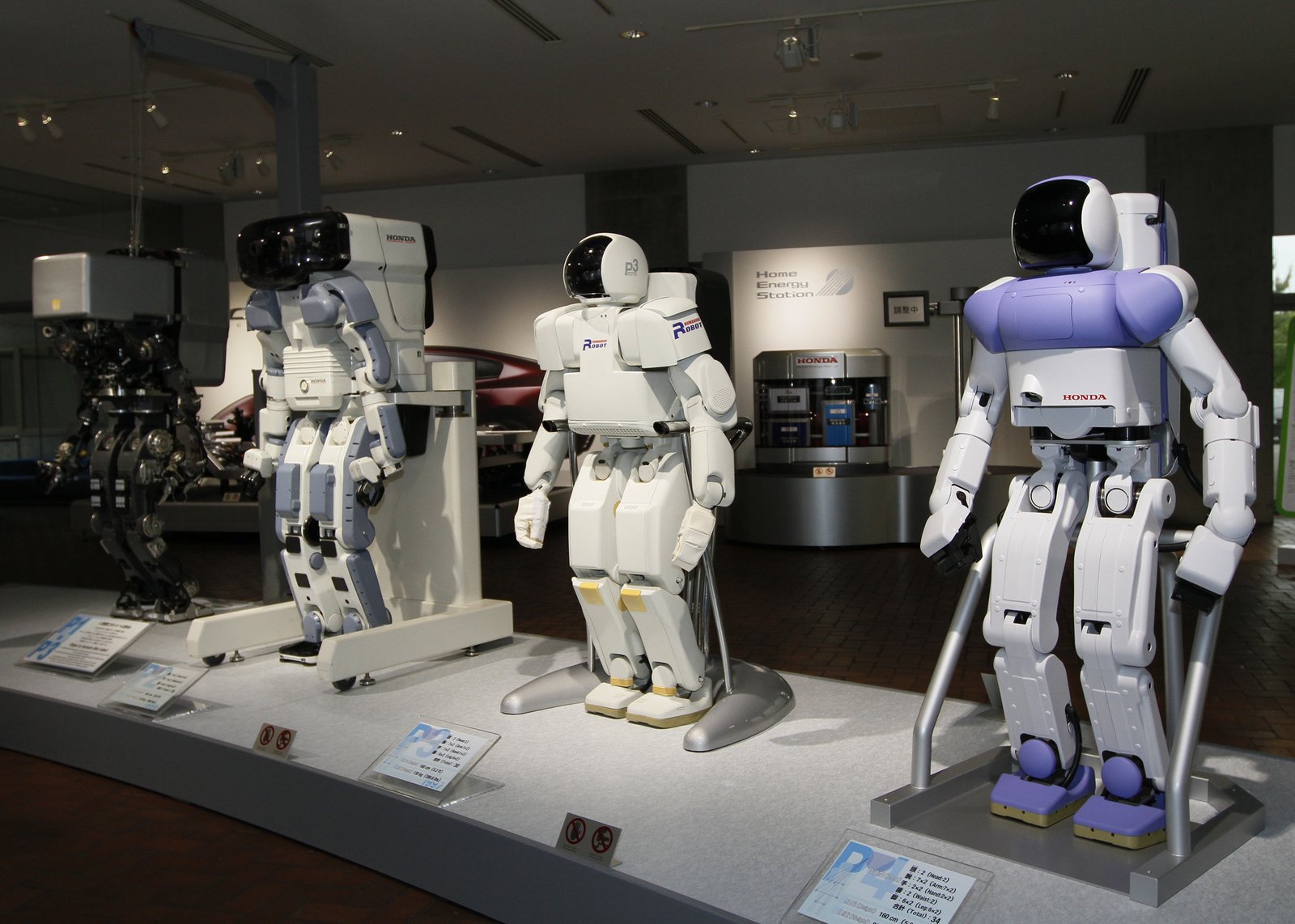
Physical AI is about to shake things up. While everyone focuses on ChatGPT and coding assistants, something quieter is happening. AI is crawling out of your laptop and into your living room, your backyard, and eventually your entire life.
This guide covers what physical AI actually means, what robots you can buy right now, the humanoids shipping in 2026, and why this might be the biggest tech shift since smartphones.
The $5 billion market is about to explode to $68 billion. A $20,000 humanoid from 1X Technologies is taking preorders for home delivery. The Roborock and Ecovacs robot vacuums actually work (and iRobot filed for bankruptcy). And the honest truth about what these machines can and can’t do today.
Why Physical AI Matters Now
The same AI that powers ChatGPT and Claude is now learning to navigate the real world through robots. Deloitte’s 2026 Tech Trends report identifies the next 18 to 24 months as an inflection point for consumer adoption.
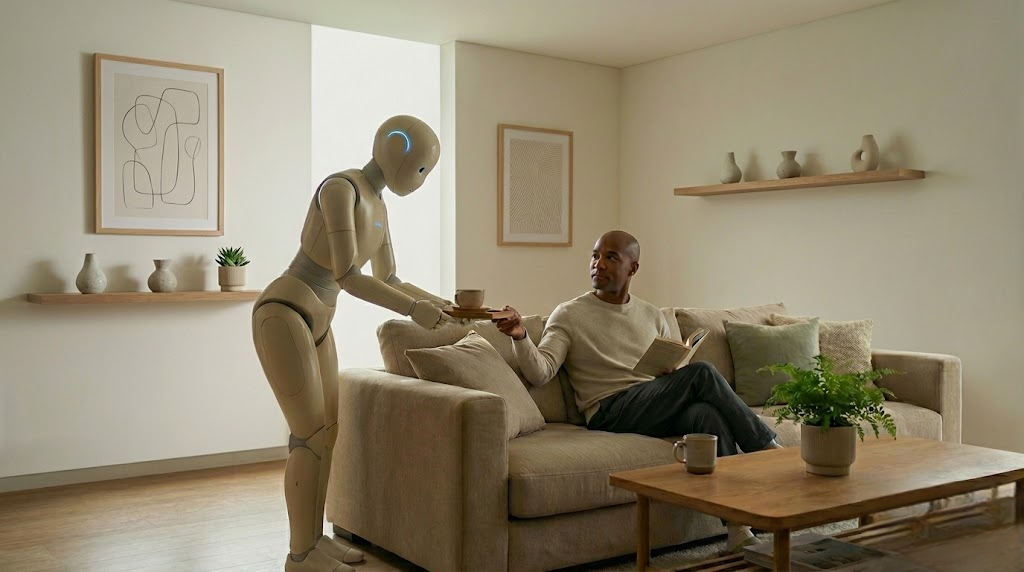
I have a robot vacuum. That’s pretty much where my physical AI journey starts and stops right now. It bumps around, misses corners, and occasionally gets stuck under the couch. Not exactly the Jetsons.
But what got my attention is that the same AI that writes code, generates images, and answers complex questions is now learning to move through the real world. To pick things up. To navigate obstacles. To actually do physical work.
The idea of having an AI handle my physical grunt work the same way Anthropic’s Claude handles my coding tasks? That’s interesting. That’s the promise of physical AI.
And according to Deloitte’s 2026 Tech Trends report, we’re at an inflection point. The next 18 to 24 months should see physical AI expand from warehouses into healthcare, utilities, construction, and consumer markets.
What Is Physical AI?
Physical AI is artificial intelligence with a body that perceives the real world through sensors, decides what to do, and physically acts. Unlike software AI like ChatGPT or Midjourney, it exists beyond screens.
The simplest way to think about it. Physical AI is AI with a body.
Unlike ChatGPT or Midjourney, which exist entirely on screens, physical AI systems can perceive the real world, process what they see, and take action. They follow a simple loop. Sense the environment, decide what to do, then physically do it.
Your robot vacuum is a perfect example. It sees a table leg with its sensors, the AI decides not to crash into it, and the wheels steer it away. That same perceive, process, act formula scales up to humanoid robots doing factory work.
The difference from traditional robots is huge. Old robots followed preprogrammed instructions. Physical AI learns from experience and adapts. Software AI knows things in theory. Physical AI understands them through sight, sound, touch, and movement.
Nvidia CEO Jensen Huang put it simply at CES 2026. “Physical AI and robotics will bring about the next industrial revolution.”
The Numbers Behind the Hype
The global physical AI market hit $5.13 billion in 2025 and is projected to reach $68.54 billion by 2034. Goldman Sachs expects 50,000 to 100,000 humanoid robot shipments in 2026 alone.
The global physical AI market hit $5.13 billion in 2025. By 2034, it’s projected to reach $68.54 billion. That’s a compound annual growth rate of 33.5%.
That’s faster than the early smartphone market grew.
Analysts at Vanguard and Barclays project AI physical investment will surge past $500 billion in 2026. That’s the biggest capital expenditure cycle in decades.
Goldman Sachs expects 50,000 to 100,000 humanoid robot shipments in 2026, with unit costs eventually dropping to $15,000 to $20,000 per robot.
UBS estimates 2 million humanoid robots in workplaces by 2035, reaching 300 million by 2050. The addressable market is $1.4 to $1.7 trillion by mid-century.
Physical AI Robots You Can Buy Right Now
Consumers can buy physical AI robots today in three categories. Robot vacuums from Roborock ($899 to $1,599), robot lawn mowers from Ecovacs and Segway ($1,300+), and home companion robots like Amazon Astro.
Forget the humanoid hype for a moment. Physical AI is already in homes, doing real work. Here’s what’s actually available today.
Robot Vacuums: The Gateway Drug

Robot vacuums have evolved dramatically. Modern units use LiDAR mapping, AI obstacle avoidance, and can mop, empty themselves, and even wash their own pads. The best ones let you say “Hey, go clean up the crumbs under the kitchen table” and they just do it.
The Roborock Saros 10R ($1,599) is rated the best robot vacuum by RTINGS. It uses multiple solid-state LIDAR sensors and RGB camera obstacle recognition. At just 3.14 inches tall, it slides under furniture most robots can’t reach. It’s also the quietest tested, running at just 50 decibels.
The Roborock Qrevo S5V ($899) offers similar performance at a lower price point. TechGearLab calls it “the best robot vacuum for most people.”
Avoid iRobot Roomba for now. On December 14, 2025, iRobot filed for Chapter 11 bankruptcy. The company’s future support for existing products is uncertain.
Robot Lawn Mowers: Set and Forget
Robot lawn mowers have finally gotten good. The latest models don’t require installing boundary wires. They use GPS, LiDAR, and AI vision to map your yard and avoid obstacles.
The Ecovacs GOAT A3000 won Reviewed’s Best of Year award for 2025. It uses both LiDAR and camera technology for navigation and handles complex yard layouts.
The Segway Navimow i110N ($1,300) is the best value option. It offers boundary-free mowing with advanced obstacle avoidance for lawns up to 0.25 acres.
For large properties, the Lymow One can handle up to 15 acres with centimeter-level precision. Husqvarna, who pioneered this category, also offers reliable options for those who prefer established brands.
Home Companion Robots
Amazon Astro is a household robot for home monitoring with Amazon Alexa built in. It can patrol your home, detect unrecognized people, and alert you to sounds like glass breaking or smoke alarms. Think of it as a mobile security camera that follows you around.
The catch is that it’s still invitation only, can’t handle stairs, and raises legitimate privacy questions about having an Amazon connected camera roaming your home.
The Humanoids Are Coming in 2026
Four companies are shipping humanoid robots in 2026. 1X Technologies (NEO, $20,000 for homes), Tesla (Optimus Gen 3, factories first), Figure AI (Figure 02/03, BMW partnership), and Boston Dynamics (Atlas, $140,000+ for industrial).
This is where it gets interesting. Multiple companies are shipping humanoid robots to homes and factories in 2026.
1X NEO: The First Consumer Humanoid
1X Technologies is taking $20,000 deposits for NEO, described as the “world’s first consumer-ready humanoid robot.” It can also be rented for $499/month with a six month commitment.
NEO stands 5’6″, has a soft body (not cold metal), and moves slowly and deliberately. It can carry about 55 pounds and lasts four hours on a charge. The robot handles tasks like unloading dishwashers and watering plants, with a built in large language model for answering questions.
Fortune reports that in testing, “all of the tasks Neo performed weren’t done autonomously.” For complex chores, a 1X employee wearing a VR headset remotely operates the robot during training sessions. First deliveries ship to U.S. homes in 2026, expanding to other markets in 2027.
Tesla Optimus
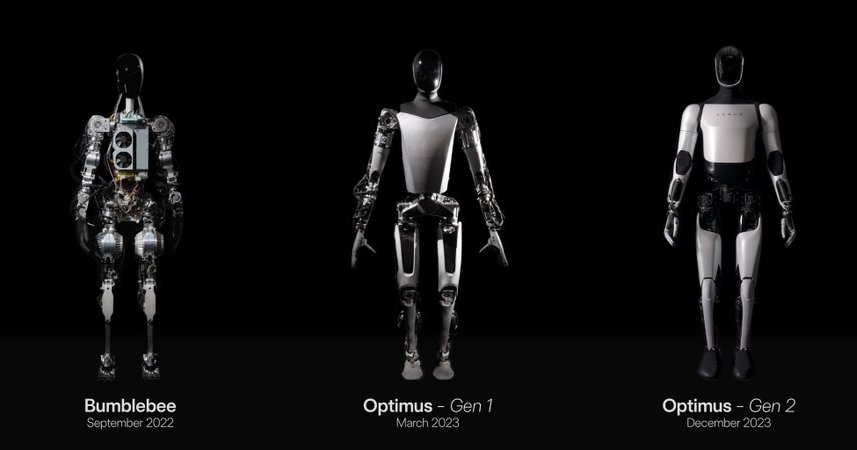
On October 7, 2025, Elon Musk unveiled major progress with Tesla’s Optimus Gen 3. In a live demonstration, Optimus performed Kung Fu sequences, cooking, and household cleaning, all learned autonomously through observation rather than explicit coding.
Musk announced plans to scale production to 5,000 units by the end of 2025, projecting that humanoid robotics could account for 80% of Tesla’s future value. Target price is $20,000 to $30,000 at full scale production.
The caveat is that Tesla has no external customers yet. All projections are internal.
Figure AI
Figure AI raised $1 billion in 2025 and already has robots working at BMW’s factory. Their Figure 02 completed a 20 hour continuous shift handling real assembly work.
What makes Figure AI interesting is that their robots learn by watching humans do a task, then replicate it. That’s a massive leap from traditional programming where every movement must be coded explicitly.
Figure 03 is their third generation humanoid designed for homes and commercial sites. It promises cleaning, folding laundry, loading dishwashers, serving food, and moving packages. The company built a new “BotQ” facility specifically for mass manufacturing.
Apptronik Apollo
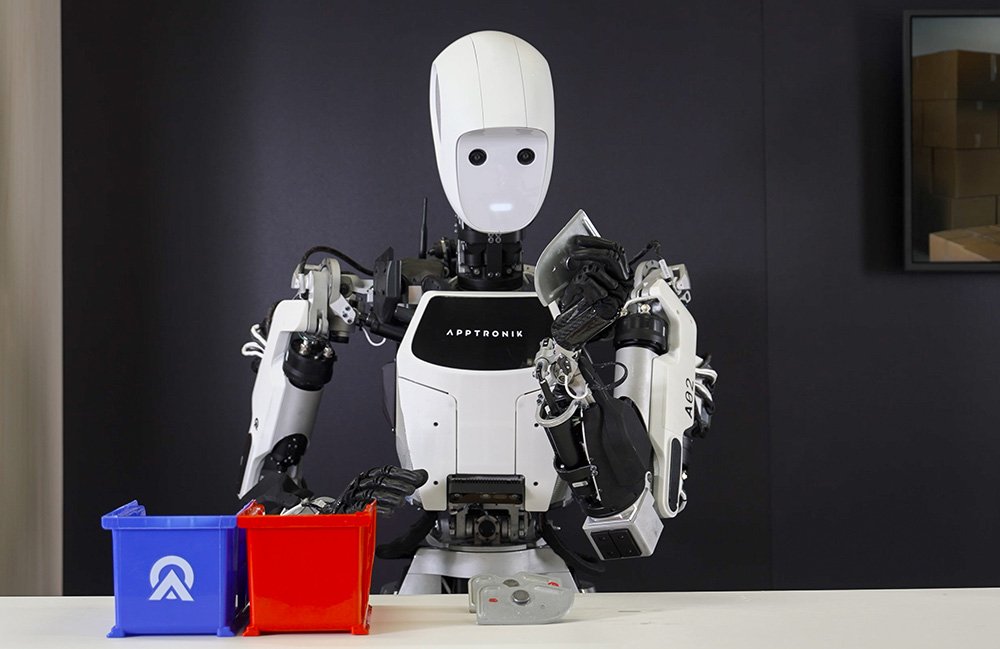
With backing from NASA and partnerships with Mercedes-Benz, Apptronik’s Apollo is built for logistics and manufacturing. Standing 5’8″ and weighing 160 pounds, it can lift up to 55 pounds and operate for four hours on a single charge.
Apollo’s design philosophy prioritizes safety around humans. Unlike industrial robots that need cages, Apollo is meant to work alongside people in warehouses and assembly lines. The NASA connection isn’t just marketing. Apptronik has worked on space robotics, and that expertise in harsh environments translates to durability.
Boston Dynamics Atlas
Boston Dynamics’ Atlas remains the benchmark for dynamic movement. Those viral videos of robots doing backflips? That’s Atlas. The all electric version is testing at Hyundai’s Georgia facility in 2025, with commercial launch planned for 2026 to 2028.
Expected price is $140,000 to $150,000. This isn’t a consumer product. It’s for industrial applications where human-like agility matters.
What’s Powering This Revolution
Four breakthroughs are converging. Vision-Language-Action models from Google DeepMind, onboard neural processing units, Nvidia’s GR00T N1 foundation model for humanoid robots, and simulation training that compresses months of data collection into hours.
Four technological breakthroughs are converging to make physical AI viable.
Vision-Language-Action Models. These are multimodal AI systems from labs like Google DeepMind and OpenAI that integrate computer vision, natural language processing, and motor control. Think of how your brain interprets what you see and decides how to move. These models do something similar.
Onboard Computing. Neural processing units from Qualcomm, Intel, and Nvidia enable low latency AI processing directly on robots without cloud dependency. When a robot needs to catch itself from falling, it can’t wait for a round trip to AWS.
Nvidia’s GR00T Platform. Nvidia announced Isaac GR00T N1 at GTC 2025, the world’s first open foundation model for humanoid robots. It’s now on version 1.6, integrating reasoning capabilities that turn vague instructions into step by step plans.
Simulation Training. Robots can now learn in virtual environments before touching the real world. Nvidia Research generated synthetic training data to develop GR00T N1.5 in just 36 hours, compared to what would have taken nearly three months of manual human data collection.
The Honest Challenges
Physical AI faces seven practical barriers. The sim-to-real gap, chaotic home environments, safety risks from hardware hallucinations, staged vendor demos, four hour battery life limits, nonexistent repair infrastructure, and $20,000+ price tags.

Physical AI faces problems that software AI doesn’t have to worry about.
The Sim-to-Real Gap. “A robot might learn to grab something in simulation, but when it enters physical space, it’s not a one-to-one match,” one roboticist told Deloitte. Nvidia’s Isaac Sim and Google DeepMind’s simulation tools don’t perfectly mirror actual conditions. Lighting, textures, and unexpected objects all cause problems.
The Home is Chaos. Factory floors are structured and predictable. Your living room is not. A robot shown folding a towel in a lab is a universe away from one that can navigate a messy kid’s room, figure out which clothes are dirty, avoid the family cat, and not knock over your coffee. The home is the ultimate chaotic environment, which is why factories come first.
Safety. With software AI, hallucinations produce bad text. With physical AI, hallucinations have real world consequences. A heavy humanoid robot making a mistake can cause actual harm.
Staged Demos. Most “general purpose” humanoid demos from Tesla, Figure AI, and 1X Technologies involve controlled conditions with simple objects, generous lighting, and no time pressure. Many vendors use a blend of scripted behavior, teleoperation, and AI planning rather than full autonomy.
Battery Life. The 1X NEO lasts four hours on a charge. That’s enough to unload a dishwasher, not enough to be a full time household helper. Your phone barely lasts a day. A 150 pound robot walking and lifting things requires immense power.
Repair and Maintenance. When your Roborock breaks, you can order parts or call customer service. When a $20,000 humanoid stops working, what do you do? You can’t take it to the Geek Squad. A whole new industry of robotic repair and maintenance needs to be built first.
Cost. $20,000 is a lot for a robot that still needs human assistance for complex tasks. Mainstream adoption requires prices to drop significantly. For more on how AI technology costs are trending, we track these developments.
My Take: The Physical AI Future I Actually Want
Single purpose robots like the Roborock Saros 10R and Ecovacs GOAT A3000 deliver more practical value today than any $20,000 humanoid, because they do one job really well without needing human teleoperation.
I don’t need a humanoid butler. I need something that vacuums without getting stuck, mows the lawn without me thinking about it, and maybe handles the dishes while I’m working. The boring, repetitive physical tasks that eat up time I’d rather spend doing literally anything else.
The current generation of single purpose robots (Roborock vacuums, Ecovacs mowers, Dolphin pool cleaners) is already pretty good at this. They’re not flashy, but they work. A $1,300 Segway Navimow that handles my yard every few days is more valuable to me than a $20,000 1X NEO humanoid that can theoretically fold laundry but needs a human operator for training.
The humanoids are coming. But for most people, the practical value is still in the specialized robots that do one job really well.
What’s Actually Worth Buying in 2026
A high end robot vacuum and mop combo ($899 to $1,599) is the single best physical AI purchase today, while robot lawn mowers are worth watching and humanoid robots for home use are still 5 to 10 years from practical adoption.

Worth It Right Now. A high end robot vacuum and mop combo like the Roborock Saros 10R or Qrevo S5V. The tech is mature, the convenience is real, and you’ll get your time back immediately. This is the single best piece of physical AI you can own today.
Wait and See. Robot lawn mowers like the Ecovacs GOAT A3000 and Segway Navimow. They work well for standard yards, but setup can be annoying and they struggle with complex layouts. Wait for the wire free GPS models to mature and drop in price.
Don’t Bother Yet. Humanoid robots from 1X Technologies, Tesla, or Figure AI for personal use. Watch the industrial deployments over the next few years with interest, but for home use, we’re realistically 5 to 10 years away from something capable, safe, and affordable enough for most families.
Questions About Physical AI
What is physical AI?
Physical AI is AI with a body. It refers to artificial intelligence systems that can perceive, understand, and interact with the physical world in real time. Unlike software AI like ChatGPT or Claude that exists only on computers, physical AI operates through robots, drones, autonomous vehicles, and other machines that move and manipulate objects in the real world.
When will I be able to buy a humanoid robot for my home?
The 1X Technologies NEO is taking preorders now at $20,000, with first deliveries to U.S. homes expected in 2026. Tesla’s Optimus targets a $20,000 to $30,000 price point but has no confirmed consumer availability date. Realistically, household assistant robots performing butler level tasks are still 5 to 10 years away from being practical for most people.
What physical AI robots can I buy right now?
Robot vacuums (Roborock, Dreame, Ecovacs), robot lawn mowers (Ecovacs GOAT, Segway Navimow, Husqvarna), robot pool cleaners (Dolphin), and home monitoring robots (Amazon Astro) are all available today. Prices range from $700 for basic models to $1,700 for premium units.
How big is the physical AI market?
The global physical AI market reached $5.13 billion in 2025 and is projected to hit $68.54 billion by 2034, growing at 33.5% annually. Goldman Sachs projects 50,000 to 100,000 humanoid robot shipments in 2026 alone.
The Bottom Line
Physical AI is real, it’s available now in limited forms, and it’s about to get much more capable. The $5 billion market is racing toward $68 billion. Humanoids from 1X Technologies, Tesla, Figure AI, and Boston Dynamics are shipping to homes and factories next year. And the specialized robots (Roborock vacuums, Ecovacs mowers, Dolphin pool cleaners) are already good enough to save you hours every week.
2026 won’t be the year robots replace everything. But it will be the year we stop thinking of AI as something that only lives on screens.
Related Reading: Browse AI news | Explore our guides | New to AI? Start here
This post contains affiliate links. Everyday AI may earn a small commission from qualifying purchases at no extra cost to you.