ℹ️ Quick Answer: YouTube permanently banned Screen Culture and KH Studio, two fake AI movie trailer channels with over 2 million subscribers and a billion combined views. The channels used AI deepfakes and manipulated footage to create trailers for movies that didn’t exist. You can spot fakes by checking channel names, watching for unnatural facial movements, and verifying announcements through official studio accounts.
📋 WHAT’S INSIDE
- What These Fake AI Movie Trailer Channels Were Doing
- Why YouTube Finally Took Action
- How to Spot Fake AI Movie Trailers
- Why Fake AI Trailers Actually Matter
- What YouTube Is Doing About AI Content
- The Bottom Line on Fake AI Movie Trailers
- Common Questions About Fake AI Movie Trailers
Last week a friend sent me what looked like an official trailer for a James Bond film starring Henry Cavill and Margot Robbie. Dramatic music, slick editing, millions of views. I almost shared it.
It was completely fake.
Fake AI movie trailers have been fooling millions of YouTube viewers, and YouTube just permanently banned two of the biggest offenders. Screen Culture and KH Studio had over 2 million subscribers and a billion combined views. If you’ve ever gotten excited about a movie that turned out to not exist, you probably watched one of their videos.
This matters beyond just movie trailers. The same AI techniques that fooled a billion viewers with fake Batman casting are being used across the internet. Getting better at spotting fake trailers makes you better at spotting AI deception everywhere.
What These Fake AI Movie Trailer Channels Were Doing
Screen Culture, based in India, had a team of about a dozen editors who figured out how to game YouTube’s algorithm. Their strategy was simple. Be first with fake trailers and create multiple versions of each one. For The Fantastic Four: First Steps alone, they created 23 different trailer versions before the official one even dropped. Some of their fake trailers actually ranked higher in YouTube search results than the real thing.
KH Studio took a different approach. Instead of just manipulating existing footage, they created entirely fictional movie concepts. Want to see Leonardo DiCaprio in Squid Game? They made that trailer. A new Batman with a different actor? They had it. These weren’t labeled as fan creations or concepts. They were presented as if they were legitimate movie announcements.
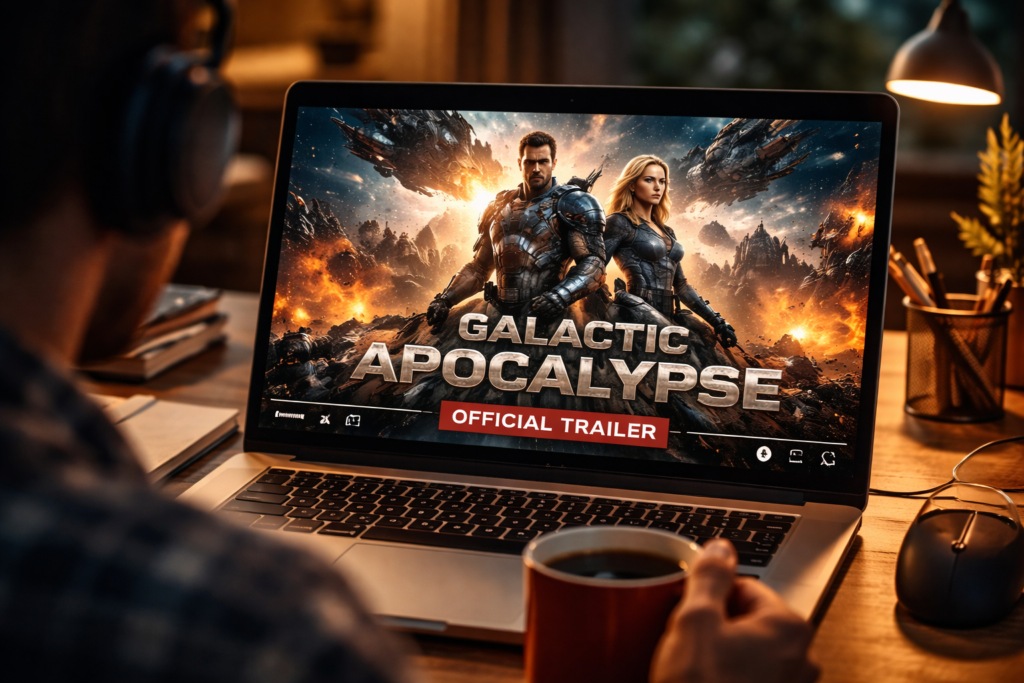
The channels would splice together real footage from existing movies with AI-generated images, fake voiceovers, and manipulated scenes. Unless you were really paying attention, these looked convincing enough that millions of viewers thought they were watching official studio content. This is similar to concerns about AI-generated faceless YouTube content that’s becoming increasingly common across the platform.
Why YouTube Finally Took Action
YouTube terminated both channels after a Deadline investigation exposed them in March 2025. The channels briefly added disclaimers, got back into the partner program, then quietly dropped the labels and went right back to posting unlabeled fakes.
This wasn’t YouTube’s first attempt to deal with the problem. Back in March 2025, YouTube suspended ad revenue on both channels after a Deadline investigation exposed what was happening. The channels responded by adding disclaimers like “fan trailer,” “parody,” and “concept trailer” to their video titles.
That worked for a while. YouTube let them back into the partner program, and they started making money again. But in recent months, the disclaimers quietly disappeared. The channels went right back to posting fake trailers without any indication that they weren’t official.
According to YouTube’s statement to Deadline, this violated the platform’s spam and misleading metadata policies. The result? Both channels are now completely terminated. When you try to visit them, you just see a message saying “This page isn’t available.”
One YouTuber in the fan-made trailer community told Deadline that “the monster was defeated.”
How to Spot Fake AI Movie Trailers
Check the channel name, watch for unnatural facial movements around the eyes and mouth, and be skeptical of trailers for unannounced movies that appear suspiciously early.
Even with Screen Culture and KH Studio gone, fake AI trailers aren’t going away. Other channels are still operating, and the technology is only getting better. Here’s what I’ve learned about spotting them before you get fooled (or before you excitedly share one with friends).
Trust your gut when something feels off. If you’re watching a trailer and thinking “this looks weird,” pay attention to that instinct. Look at characters’ faces closely. Are they blinking naturally? Do their expressions match what’s happening? AI still struggles with subtle facial movements, especially around the eyes and mouth.
Check the channel name. Official movie trailers come from studio channels or the movie’s official account. If a “Batman” trailer is posted by “MovieFan2024” instead of Warner Bros., that’s a red flag. The major studios all have verified YouTube channels.
Look at the upload timing. Fake trailer channels try to be first. If you’re seeing a trailer for a movie that hasn’t been officially announced yet, or if the trailer appears suspiciously early, be skeptical. Real trailers follow studio marketing schedules.
Listen to the audio. AI-generated voices often sound slightly robotic or take no breaths between sentences. If the narration feels breathless or unnatural, that’s a tell. Real trailers use professional voice actors who, you know, actually breathe.
Watch for impossible casting. A trailer showing Tom Hanks in a Marvel movie or Meryl Streep in Fast & Furious? Unless you’ve seen it confirmed by entertainment news outlets like The Hollywood Reporter or Variety, it’s probably AI fantasy casting.
Why Fake AI Trailers Actually Matter
These channels were making real money by deceiving people, the same deepfake techniques erode trust in all online video, and fake trailers can damage real movies’ marketing campaigns.
You might be thinking “so what, it’s just movie trailers.” But this is a bigger deal than it seems.
These channels were running ads on fake content, profiting from your clicks and views. Every time someone watched a fake trailer thinking it was real, these channels earned ad revenue based on that deception.
It also erodes trust in what we see online. If movie trailers can be faked this convincingly, what else can? The same AI techniques used for fake trailers power deepfakes across every category. Getting better at spotting fake trailers makes you better at spotting AI deception in general.
And it can actually hurt the real movies. When a fake trailer sets expectations that the real movie can’t meet, or when fake announcements confuse the marketing timeline, it creates problems for the studios and filmmakers trying to promote their actual work.
What YouTube Is Doing About AI Content
YouTube is rolling out a “likeness detection” feature using biometric data to flag unauthorized deepfakes. They also require AI content disclosure, though enforcement remains inconsistent.
YouTube has been rolling out new tools to address AI-generated content more broadly. According to CNBC, they recently expanded a “likeness detection” feature that helps creators flag when their face is being used without permission in deepfakes. Creators can opt in by submitting a photo ID and a short video clip, which trains the system to recognize unauthorized uses of their likeness.
The platform also requires disclosure when content is AI-generated, similar to what Valve’s Steam does for video games. But enforcement has been inconsistent, which is why channels like Screen Culture were able to operate for so long before getting shut down.
Some advocates want YouTube to go further, requiring clear AI disclosure on every video that uses generative AI tools. That would help viewers like you and me make informed choices about what we’re watching. Right now, it’s still largely up to us to figure out what’s real. Tools like TrueMedia.org can help detect AI-generated deepfakes with about 90% accuracy.
The Bottom Line on Fake AI Movie Trailers
YouTube shutting down Screen Culture and KH Studio is a win for anyone who’s tired of getting fooled by fake content. But it’s not the end of the story. AI-generated fake trailers will continue to pop up, and the technology will keep improving.
The best defense is knowing what to look for. Check the channel, watch the timing, listen to the audio, and trust your instincts when something seems off. And maybe wait for official announcements before getting too excited about that dream casting you saw in a trailer last night.
If you want to test your own ability to spot AI-generated content, Northwestern University’s Detect Fakes experiment is a fascinating way to see how well you can distinguish real images from AI creations. I tried it, and let’s just say I wasn’t as good at it as I thought I’d be.
Common Questions About Fake AI Movie Trailers
Are all fan-made trailers fake or bad?
Not at all. There’s a long tradition of creative fan-made content that’s clearly labeled as such. The problem is when channels present AI-generated content as official or fail to disclose that it’s fan-made. Honest fan creators are frustrated by the channels that deceive viewers because it gives everyone a bad reputation.
Can YouTube detect fake AI trailers automatically?
YouTube is developing detection tools, but they’re not perfect yet. The platform relies partly on user reports and manual review. As AI generation gets more sophisticated, detection has to keep up, and that’s an ongoing challenge for every platform dealing with synthetic content.
What should I do if I find a fake trailer channel?
You can report the video to YouTube for misleading content. Click the three dots beneath the video and select “Report.” You can also choose “Don’t recommend channel” to stop seeing content from that source in your feed. If enough people report these channels, YouTube takes notice.
Related reading: AI YouTube Channels and Faceless Content | AI Video Creation Without a Camera | New to AI? Start here
WHO WROTE THIS
Moses Smith. I write Everyday AI for people who aren’t engineers. I go try the tools, then tell you honestly whether they were worth it. Sometimes the answer is no, and that’s kind of the point.
This blog is free and has no ads. If it saved you some time, you can buy me a coffee.