ℹ️ Quick Answer: Bandcamp bans AI music as of January 2026, making it the first major music platform to block tracks “generated wholly or in substantial part by AI.” The policy prohibits AI voice cloning, relies on user reports for enforcement, and signals a growing industry split between platforms that welcome AI music and those drawing a hard line.
📋 WHAT’S INSIDE
- What Bandcamp’s AI Music Ban Actually Says
- Why Bandcamp Bans AI Music Now
- The Gray Areas
- Bandcamp Isn’t Alone
- Watch: Bandcamp’s AI Music Ban Explained
- My Take
Bandcamp bans AI music as of January 13, 2026. The indie music platform announced it will no longer allow music “generated wholly or in substantial part by AI.” This makes Bandcamp the first major music platform to officially draw a line against synthetic tracks.
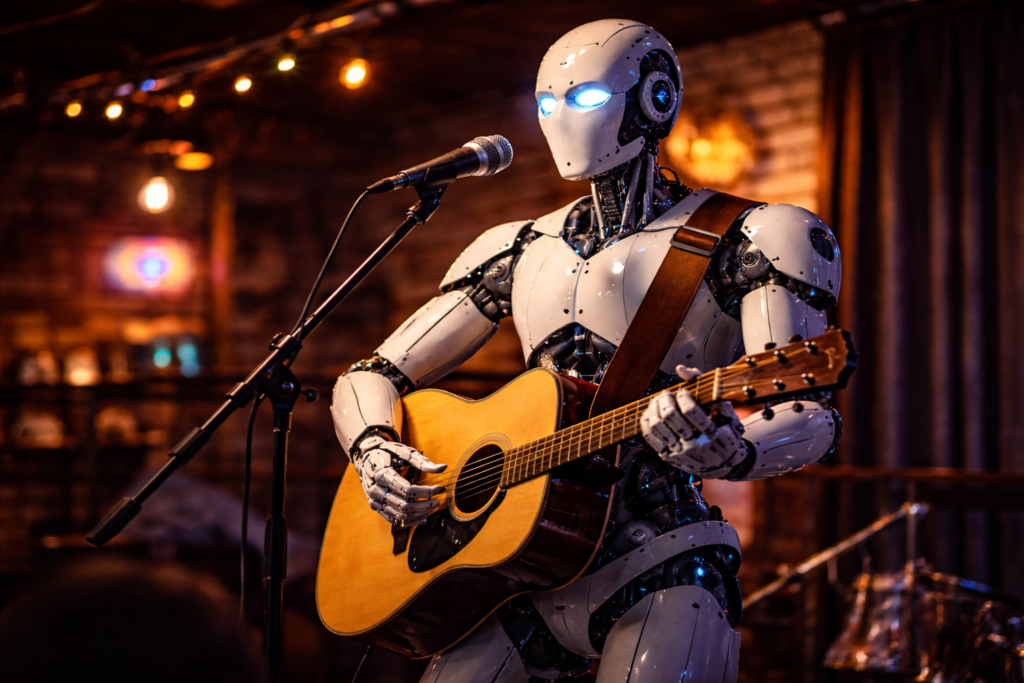
I’ve heard AI-generated songs that are good. Catchy enough that I catch myself humming them later. But I also get why Bandcamp made this call. When your whole platform exists to connect fans directly with independent artists, flooding it with machine-made tracks defeats the purpose.
What Bandcamp’s AI Music Ban Actually Says
Bandcamp’s new policy bans music created entirely or substantially by AI, prohibits AI voice cloning of other artists, and enforces violations through user reports with potential removal without warning.
In a blog post titled “Keeping Bandcamp Human,” the platform laid out its new policy.
- Banned: Music created entirely or substantially by AI
- Banned: AI tools used to impersonate other artists
- Enforcement: User reporting plus platform review
- Consequence: Removal, potentially without warning
Bandcamp’s reasoning: “We believe that the human connection found through music is a vital part of our society and culture, and that music is much more than a product to be consumed.”
Why Bandcamp Bans AI Music Now
The volume of AI-generated music uploads exploded in 2025. Deezer alone went from 10,000 AI tracks per day in January to 50,000 per day by December, forcing platforms to pick a side.
The timing makes sense when you look at the numbers. Deezer reported receiving 10,000 fully AI-generated songs per day in January 2025. By December, that number hit 50,000 daily.
AI music isn’t a hypothetical anymore. Artists using tools like Suno and Udio have topped Spotify charts and landed record deals. The flood is real, and platforms have to decide what they want to be.
Bandcamp chose authenticity. Their business model depends on fans paying artists directly. If buyers can’t trust that a human made the music, the whole value proposition breaks down.
The Gray Areas
Bandcamp’s policy doesn’t define exactly where human-assisted AI production ends and “substantially AI” begins, leaving questions around mastering tools, vocal synthesis, and detection accuracy.
The policy leaves some questions unanswered.
- What counts as “substantial”? A track with AI-assisted mastering through iZotope Ozone? AI-generated backing vocals via Suno? The line isn’t clear.
- How do they detect it? The policy relies on user reports, which means false positives are possible.
- What about vocal synthesis tools? Programs like Synthesizer V and Vocaloid aren’t explicitly addressed.
Bandcamp acknowledges the policy “may evolve as the rapidly changing generative AI space develops.” They’re figuring this out as they go, like everyone else.
Bandcamp Isn’t Alone
iHeartRadio, Sony Music, Universal Music Group, and YouTube have all taken steps to restrict or label AI-generated music, while Spotify remains the biggest holdout.
- iHeartRadio launched “Guaranteed Human,” banning AI songs from its radio stations
- Sony Music and Universal Music Group are suing Suno and Udio over alleged copyright infringement in training data
- YouTube requires disclosure of AI-generated content
Meanwhile, Spotify continues to host AI-generated playlists without restriction. The industry is splitting into camps. If you’re curious about how AI is changing other parts of daily life too, the Start Here page covers the basics.
Watch: Bandcamp’s AI Music Ban Explained
My Take
Bandcamp’s ban has nothing to do with sound quality. It comes down to preserving the direct artist-to-fan relationship that defines the platform, even as AI music gets impressively good.
Some AI-generated music is legitimately impressive. I’ve found myself singing hooks from tracks that were entirely machine-made. The technology has gotten that good.
But Bandcamp exists for a specific reason. Connecting independent artists with fans who want to support them. When you buy an album on Bandcamp, you’re backing a person, a story, a creative journey. AI-generated tracks don’t carry that weight.
The ban comes down to what Bandcamp wants to be. And they’ve made their choice clear. For more on what’s happening across the AI news space, I cover stories like this regularly.
The music industry’s AI reckoning is just getting started, and Bandcamp won’t be the last platform to pick a side.
Related reading: AI 2025 Year in Review: The Year We Stopped Believing the Hype | AI Music Is Democratizing Songwriting. The Problem Is What Happens Next. | New to AI? Start here
WHO WROTE THIS
Moses Smith. I write Everyday AI for people who aren’t engineers. I go try the tools, then tell you honestly whether they were worth it. Sometimes the answer is no, and that’s kind of the point.
This blog is free and has no ads. If it saved you some time, you can buy me a coffee.