ℹ️ Quick Answer: Meta cut 1,500 Reality Labs employees in January 2026, shut down five VR game studios, and put its $400 million Supernatural fitness app into maintenance mode. The company is redirecting its $71 billion metaverse investment toward Ray-Ban smart glasses and phone-based AI features instead.
📋 WHAT’S INSIDE
- Meta Reality Labs Layoffs: What Actually Happened
- Meta Metaverse Losses: $71 Billion and Counting
- Which VR Studios Are Closing
- My Take: I’m Actually Glad Meta Went This Hard on VR
- What Meta Reality Labs Is Pivoting Toward
- What This Means for Quest Owners
- The Bigger Picture: AI Everywhere Beats VR Somewhere
- FAQs About Meta Reality Labs Layoffs
Meta Reality Labs layoffs hit 1,500 employees this week, marking the first major tech cuts of 2026. The company is shutting down VR game studios, putting its $400 million fitness app into hibernation, and pivoting hard toward AI wearables instead.
So the metaverse dream is… complicated now. And honestly? I have mixed feelings about that.
Meta Reality Labs Layoffs: What Actually Happened
Meta cut roughly 1,500 employees (about 10% of Reality Labs’ 15,000-person workforce) in January 2026, shifting investment away from VR headsets and metaverse products toward Ray-Ban smart glasses and phone-based AI features.
Meta cut roughly 10% of its Reality Labs workforce. That translates to about 1,500 people losing their jobs. Reality Labs is the division behind everything from the Quest headsets to Horizon Worlds to Ray-Ban smart glasses.
The layoffs aren’t random cost-cutting. They’re part of what a Bloomberg report describes as a deliberate shift from VR and metaverse products toward AI wearables and phone features.
“We said last month that we were shifting some of our investment from Metaverse toward Wearables,” a Meta spokesperson told reporters. “This is part of that effort, and we plan to reinvest the savings to support the growth of wearables this year.”
So the headset-first future is on pause. The Ray-Bans and AI features for your phone are getting the attention now.
Meta Metaverse Losses: $71 Billion and Counting
Reality Labs has burned through $71 billion since 2021, including $17.7 billion in 2024 alone, consuming 21% of Meta’s total operating costs while producing no profitable product line.
The numbers behind this pivot are staggering. Since 2021, Reality Labs has lost $71 billion. Seventy-one billion dollars. In 2024 alone, the division burned through $17.7 billion while consuming 21% of Meta’s total operating costs.
That’s not a typo. That’s the cost of betting big on a future that hasn’t arrived yet.
To put that in perspective. $71 billion could buy you Netflix. Twice. With enough left over to grab a few smaller streaming services as souvenirs.
Which VR Studios Are Closing
Meta is shutting down five studios (Armature, Twisted Pixel, Sanzaru, Oculus Studios Central Technology, and Ouro Interactive) and putting its $400 million Supernatural VR fitness acquisition into maintenance mode.
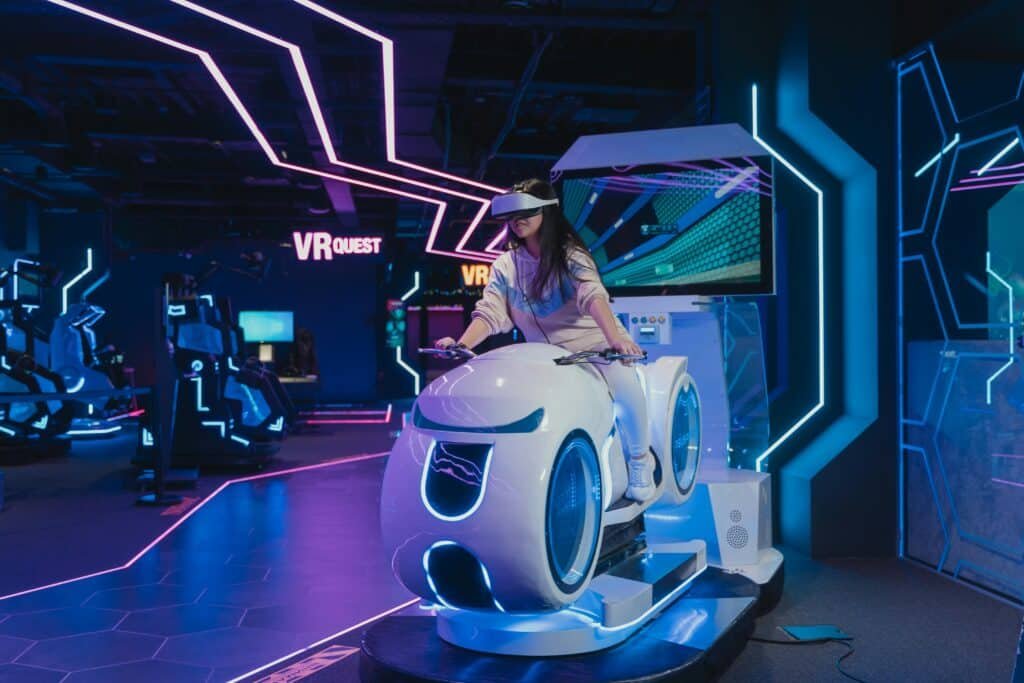
The cuts aren’t just about headcount. Entire studios are shutting down.
- Armature Studio
- Twisted Pixel
- Sanzaru
- Oculus Studios Central Technology
- Ouro Interactive (the team building content for Horizon Worlds)
And then there’s Supernatural. Remember when Meta bought that VR fitness app for $400 million back in 2023? It’s now in “maintenance mode.” That means a skeleton crew keeping the lights on. No new workouts. No new features. Just… existing.
⚠️ If You Use Supernatural: The app will keep working, but don’t expect new content. Might be time to explore alternatives if VR fitness is part of your routine.
My Take: I’m Actually Glad Meta Went This Hard on VR
Meta’s aggressive VR spending produced the $500 Quest 3, a device that delivers 90% of Apple’s $3,500 Vision Pro experience, because Zuckerberg subsidized the hardware to drive adoption at scale.
I know this sounds strange given all the money they’ve lost.
I own a Quest 3. Use it constantly. And it exists because Meta threw billions at a problem nobody else was willing to fund at that scale.
Would VR be where it is today without Zuckerberg’s obsessive investment? Probably not. Apple’s Vision Pro costs $3,500. The Quest 3 costs $500 and does 90% of what most people actually want from mixed reality. That price difference exists because Meta subsidized the hardware to get it into people’s hands.
Maybe they jumped in too fast. Maybe the timing was off. The metaverse hype cycle peaked during the pandemic when everyone was stuck at home, and the return to normal life cooled enthusiasm faster than anyone predicted.
But someone had to be first. Someone had to lose money proving what works and what doesn’t. And as a result, I have a device that lets me work out in my living room, watch movies on a virtual 200-inch screen, and occasionally slice blocks to electronic music while my family wonders what happened to me.
What Meta Reality Labs Is Pivoting Toward
Meta is redirecting Reality Labs investment toward Ray-Ban Meta smart glasses (already past 1 million units sold), phone-based AI features, and lightweight wearables that blend into daily life rather than requiring a headset.

The money isn’t disappearing from hardware entirely. It’s shifting toward.
- Ray-Ban Meta smart glasses (already a quiet hit with 1+ million units sold)
- AI features integrated into phones
- Wearables that feel less like face computers and more like regular accessories
This tracks with what we’ve been seeing across the industry. The OpenAI Gumdrop pen is designed to be a screenless AI device. The trend is clear. People want AI that blends into their existing lives, not AI that requires them to strap a computer to their face.
Meta’s new Mango and Avocado AI models are also part of this pivot. The company is betting that AI capabilities, not virtual worlds, will drive its next wave of growth.
What This Means for Quest Owners
Quest headsets will continue to be sold and supported, but expect slower software updates, fewer first-party VR games, and a shift toward mixed reality features that complement Ray-Ban glasses and phones.
If you own a Quest headset, don’t panic. The hardware isn’t going anywhere immediately. Meta is still selling Quest devices and maintaining the platform.
But the writing is on the wall for where investment goes next. Expect.
- Slower updates for Quest software
- Fewer first-party VR games and experiences
- More emphasis on mixed reality features that complement phones and glasses
- Ray-Ban glasses getting the new AI features first
The Quest line will probably continue, but as a smaller piece of a larger wearables strategy rather than the centerpiece of Meta’s future.
The Bigger Picture: AI Everywhere Beats VR Somewhere
Meta’s pivot reflects a broader industry bet that AI features on devices people already own (phones, glasses) will generate faster returns than immersive virtual worlds requiring dedicated headsets.
This pivot tells us something about where the tech industry thinks value lies right now. Building immersive virtual worlds is expensive and adoption is slow. Building AI features that work on devices people already own is faster and cheaper.
Meta tried to create a new category. Now they’re integrating into existing ones.
This isn’t a total failure. It’s an expensive lesson about timing and consumer behavior. The $71 billion spent on VR created technology that will show up in other forms, in other products, for years to come. Ray-Ban glasses exist partly because Meta learned what works (audio, camera, lightweight) and what doesn’t (heavy displays, isolation, high prices).
As someone who enjoys VR, I hope the pivot doesn’t mean abandoning the technology entirely. But I also understand why a company that’s lost $71 billion might want to try something else for a while.
FAQs About Meta Reality Labs Layoffs

How many Meta employees were laid off in 2026?
Meta laid off approximately 1,500 employees from its Reality Labs division in January 2026, representing about 10% of the division’s 15,000-person workforce.
Is Meta shutting down the metaverse?
Meta is scaling back significantly, though they’re not abandoning VR entirely. Several VR studios are closing, and resources are shifting toward AI wearables like Ray-Ban smart glasses and phone-based AI features.
Will my Quest headset still work?
Yes. Meta continues to sell and support Quest devices. However, expect fewer new features and first-party content as investment shifts toward other products.
How much has Meta lost on Reality Labs?
Reality Labs has lost approximately $71 billion since 2021, including $17.7 billion in 2024 alone.
The metaverse isn’t dead, but it’s definitely taking a nap while AI wearables get their turn.
Related reading: Physical AI Is Coming: The Robots That Will Do Your Grunt Work in 2026 | OpenAI Gumdrop AI Pen: Is This Finally the AI Hardware That Works? | Meta’s New AI Models Mango and Avocado | New to AI? Start here
This post contains affiliate links. If you purchase through these links, I may earn a small commission at no extra cost to you.
WHO WROTE THIS
Moses Smith. I write Everyday AI for people who aren’t engineers. I go try the tools, then tell you honestly whether they were worth it. Sometimes the answer is no, and that’s kind of the point.
This blog is free and has no ads. If it saved you some time, you can buy me a coffee.