ℹ️ Quick Answer: AI jobs 2026 are creating career paths that didn’t exist five years ago, with roles like Machine Learning Engineer, AI Product Manager, and Prompt Engineer now commanding salaries from $95,000 to over $270,000. The World Economic Forum projects 170 million new AI-related jobs by 2030, offset by 92 million displaced positions, for a net gain of 78 million jobs.
📋 WHAT’S INSIDE
- The Top 5 AI Jobs 2026 You Should Know About
- The Honest Truth About Getting Hired for AI Jobs
- How to Get Started with AI Jobs 2026
- Frequently Asked Questions About AI Jobs 2026
- Looking Ahead
I’ve seen the AI anxiety everywhere. Reddit, X, Instagram, you name it. Many are convinced robots are coming for their paychecks. A few years ago, it felt like sci-fi. Now it’s real.
But while headlines scream about layoffs, I’m seeing job titles pop up that sound like they belong in a novel. In Q1 2025 alone, there were 35,445 new AI positions posted. That’s a 25.2% jump from the year before. The median salary for AI professionals hit $156,998. People are getting paid, and paid well, to talk to chatbots or design ethical guidelines for algorithms. The market is shifting. Not vanishing.
The Top 5 AI Jobs 2026 You Should Know About
The five highest demand AI roles in 2026 are Machine Learning Engineer ($135K to $215K), AI/Data Scientist (36% projected growth through 2033), AI Product Manager, Prompt Engineer ($95K to $270K at 32.8% CAGR), and AI Ethics and Safety Specialist.
1. Machine Learning Engineer
These are the architects building the engines that power everything from Netflix recommendations to Tesla’s self-driving software. They design systems that learn and improve on their own.
According to 365 Data Science, salaries range from $135,000 to $215,000, with 41.8% year over year growth. Companies are desperate for people who can actually build these systems.
Skills needed: Python or Java, TensorFlow or PyTorch, data structures and algorithms.
Who’s hiring: Google, Meta, JPMorgan Chase, Walmart, Amazon, and most Fortune 500 companies.
2. AI/Data Scientist
If ML Engineers are architects, Data Scientists are detectives. They dig through massive piles of messy data to find the story hidden inside, figuring out what’s needed to train a model properly.
The Bureau of Labor Statistics projects 36% growth through 2033. Fair warning: you’ll spend about 80% of your time cleaning data. Fixing typos, standardizing formats, removing duplicates.
Skills needed: Statistics, data visualization (Tableau, PowerBI), SQL, Python/R, and real curiosity.
Who’s hiring: Healthcare companies, marketing firms, logistics providers. Anyone with data they don’t understand.
3. AI Product Manager
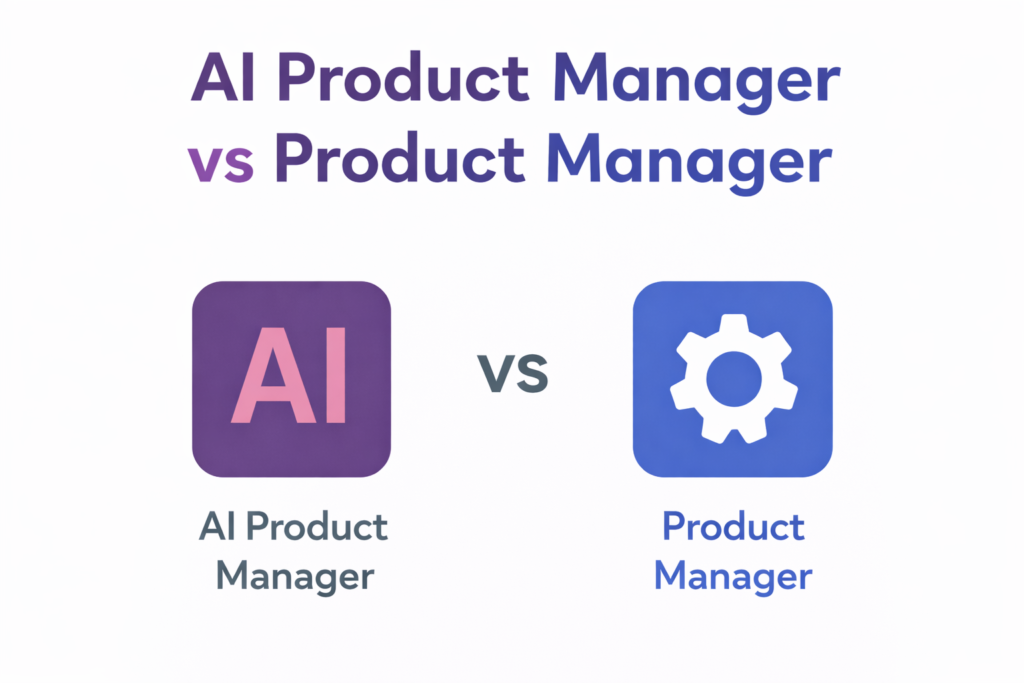
My favorite because you don’t need to be a coding wizard (even though I am a software engineer). AI Product Managers sit in the middle. They talk to engineers. They talk to customers. Their job is connecting what the tech can do with what people actually want to buy.
You’re the bridge. You explain to marketing why the AI is hallucinating, then explain to engineering why “95% accuracy” isn’t good enough for a medical diagnosis app.
Skills needed: Product lifecycle understanding, basic technical literacy, user empathy, communication.
Who’s hiring: Tech startups, SaaS companies, traditional enterprises launching AI features.
4. Prompt Engineer
A few years ago, this sounded like a joke. Now it’s one of the hottest AI jobs 2026 has to offer. Prompt Engineers figure out exactly what to say to an AI to get reliable results. That means understanding the model’s logic, testing phrasing, and creating templates that work every time.
According to PromptLayer, the market is growing at 32.8% CAGR, with salaries from $95,000 to $270,000 for top talent.
Skills needed: Excellent language and logic, patience for trial and error, understanding of LLM behavior. Basic Python helps.
Who’s hiring: OpenAI, Anthropic, marketing agencies, content platforms.
5. AI Ethics & Safety Specialist
As AI gets more powerful, we need people ensuring it doesn’t go off the rails. These specialists look for bias in data, test models for vulnerabilities, and ensure companies aren’t breaking privacy laws.
With 78% of organizations now using AI, the risk of PR disasters or lawsuits is high. Companies hire these folks as insurance. Example: catching an AI hiring tool that learned to reject women’s resumes before it goes live.
Skills needed: Ethics, law, or sociology background. Understanding of algorithmic bias. Risk management. Policy writing.
Who’s hiring: Government agencies, non-profits, big tech companies facing regulatory pressure.
The Honest Truth About Getting Hired for AI Jobs
Only about 2.5% of AI job postings are truly entry level, with most requiring 2 to 6 years of experience. Your best strategy is using your existing domain expertise as a wedge and layering AI skills on top of it.
Right now, only about 2.5% of AI job postings are truly entry level. Most ask for 2 to 6 years of experience. “How can I have 5 years of experience in a job that didn’t exist 5 years ago?”
Use your past experience as your wedge. If you were a marketing manager for 10 years, become an AI-focused marketing manager. Learn the tools that speed up your existing workflow. If you can show employers you understand their old problems and the new tools, you become the safest bet in the room.
How to Get Started with AI Jobs 2026
Start by applying AI to your current role to build a portfolio of wins, pick one specialization instead of trying to learn everything, build a real project rather than collecting certificates, and network on X, Discord, and GitHub where the builders actually are.
Don’t Quit Your Day Job Yet
Apply AI to what you’re doing now. If you’re in HR, automate screening emails. If you’re in sales, analyze call transcripts. Build a portfolio of wins where you can say, “I used AI to save my company X hours.”
Pick a Lane
Don’t try to learn everything. If you’re visual, explore image generation. If you’re analytical, learn Python. Specialization beats generalization because the field is too big for generalists.
Build Something
A certificate is nice, but a project is better. Build a chatbot, fine-tune a model, create a blog that runs on auto-pilot. Show them what you built, not what you studied.
Network in the New Spaces
The real conversations happen on Twitter (X), Discord servers, and GitHub. Find where the builders hang out, listen, then contribute.
Frequently Asked Questions About AI Jobs 2026

Do I need a PhD to work in AI?
For high-level research at DeepMind? Probably. For the other 95% of AI jobs? No. Practical application is beating academic theory in most commercial roles.
Will AI eventually take these AI jobs too?
Maybe. But the people building AI will be the last ones to turn off the lights. Being on the technology side is safer than ignoring it.
I’m over 40. Is it too late to pivot to AI jobs?
Not even close. Your domain expertise is your biggest advantage. A 22-year-old coder doesn’t know supply chains or FDA regulations. You do. Combine that knowledge with new tools, and you become very valuable.
Is this just a bubble?
The hype is loud. It writes code, diagnoses diseases, drives cars. Valuations might fluctuate, but the utility isn’t going anywhere.
Looking Ahead
The world of work keeps changing. Farms gave way to factories. Factories gave way to offices. Now we’re moving to something else entirely. Your best move is layering AI skills onto whatever domain expertise you already have, whether that means learning prompt engineering, Python basics, or AI product management.
If you want to learn how AI can help with your current career, check out our 8 AI Skills That Actually Matter in 2026. And if you’re curious about job hunting, our series on using AI to tailor your resume walks you through exactly how to stand out. New to AI altogether? Start here.
WHO WROTE THIS
Moses Smith. I write Everyday AI for people who aren’t engineers. I go try the tools, then tell you honestly whether they were worth it. Sometimes the answer is no, and that’s kind of the point.
This blog is free and has no ads. If it saved you some time, you can buy me a coffee.