

ℹ️ Quick Answer: AI scams cost Americans over $15.9 billion in 2025, with romance fraud alone topping $1.16 billion in nine months. Scammers now use AI to generate fake photos on demand, clone voices from 3 seconds of audio, and run deepfake video calls. Only 46% of people can tell an AI photo from a real one. If you or someone you know uses dating apps, hires freelancers, or answers phone calls, you need to know how these scams work.
📋 WHAT’S INSIDE
- The Romance Scam That Used to Be Easy to Spot
- Three Seconds of Your Voice Is All They Need
- You’re Paying for Human Work and Getting AI
- Why This Keeps Working
- How to Protect Yourself (and the People You Care About)
- Common Questions About AI Scams
AI scams cost Americans over $15.9 billion in 2025 according to the FTC, and we’re on pace to beat that number this year. I keep seeing the stories on Reddit and TikTok. A retired guy in his 60s sends $40,000 to a woman he’s been talking to for months. She sent him photos. They had video calls. He thought he knew her. She didn’t exist.
Two years ago that scam was harder to pull off. If someone asked for a specific photo, say “hold up today’s newspaper” or “write my name on your hand,” the scammer was stuck. They had a limited set of stolen photos and couldn’t generate new ones. Now they can. AI image generators produce custom photos in seconds. Norton’s 2026 research found that only 46% of people correctly identified AI-generated photos in a test. Worse than a coin flip.
I worked in fintech for years, and that background made me paranoid about exactly this kind of thing. Phishing emails, fake login pages, social engineering. I learned to question everything. But most people haven’t had that education, and the gap between what AI can do and what the average person thinks AI can do is where scammers live right now.
The Romance Scam That Used to Be Easy to Spot
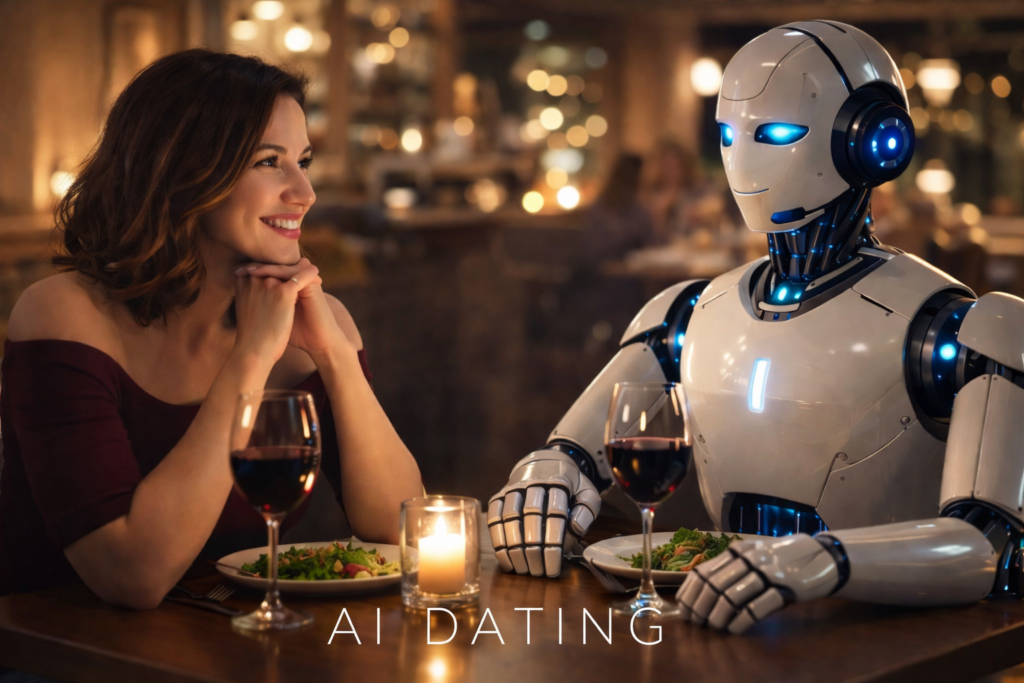
Romance scams using AI have become almost impossible to detect without knowing what to look for. The FBI reports average losses between $10,000 and $50,000 per victim, and people over 50 are hit hardest.
The old playbook was simple. Scammer steals attractive person’s photos from Instagram, creates a dating profile, builds a relationship over text, then asks for money. The weakness was always the photos. Reverse image search could catch them. Specific photo requests would expose them. The scammer had maybe 20 stolen images and had to make them last.
AI removed that weakness completely. A scammer can now generate an unlimited supply of photos of a person who doesn’t exist. Want a photo at a coffee shop? Done. A selfie in a specific outfit? Ten seconds. A video call where the “person” talks and moves naturally? Deepfake technology handles that too. Deepfake fraud in the U.S. surged 700% in the first few months of 2025, and the files jumped from 500,000 in 2023 to 8 million in 2025.
I’ve watched TikTok videos where victims describe months-long relationships with people who never existed. These aren’t careless people. They’re lonely people who had no reason to suspect that the person on their screen was entirely fabricated by software. The conversations felt real because, in many cases, the scammer was a real person using AI tools to fake a visual identity. A real person doing the emotional manipulation plus AI handling the visual proof. That’s why these scams work so well.
Three Seconds of Your Voice Is All They Need
AI voice cloning scams surged 148% in 2025, and the technology only needs about 3 seconds of audio to create a convincing copy of someone’s voice. Three seconds. That’s one voicemail greeting or a single TikTok clip.
The most common version targets older adults through what law enforcement calls the “grandparent scam.” You get a call from your granddaughter. She’s crying, says she’s been in a car accident, needs money right now. Except it’s not her. It’s a cloned voice built from a clip the scammer found on social media.
In July 2025, a Florida woman named Sharon Brightwell sent $15,000 in cash after receiving a call from her “daughter” claiming she’d been in a car accident and lost her unborn child. The voice was a clone. Among victims who engaged with these AI-powered scam calls, 77% lost money.
You’re Paying for Human Work and Getting AI
The scam problem goes beyond romance and phone calls. If you’ve hired a freelancer in the past year, there’s a growing chance you paid for human expertise and received AI output with a human’s name on it.
In 2025, articles by a freelance journalist named “Margaux Blanchard” appeared in Business Insider and Wired. Margaux didn’t exist. The articles were most likely AI-generated, and both publications pulled them after the discovery. An editor at a nonprofit publication caught another fake journalist after noticing a pitch that “seemed overly polished.” That’s the new red flag. When everyone’s writing sounds perfect, the fakes get harder to find.
Book editors are doing it too. Authors in self-publishing communities on Reddit talk about paying $500 to $2,000 for developmental editing, then receiving feedback that reads like it came from ChatGPT. Same pattern with book cover designers who charge for original illustration work and deliver something clearly generated by Midjourney or DALL-E. The client doesn’t always know enough to tell the difference, especially if they’ve never worked with an editor or designer before.
Then there’s the “pay-to-humanize” scam targeting writers directly. Fake AI detection tools scan your text, flag it as “88% AI-generated” even when you wrote every word yourself, and then offer to “humanize” it for $9.99. The detection is bogus. The fix is the product. Researchers found these tools flagging Iranian news dispatches and literary classics as AI-generated just to sell the cleanup service.
Why This Keeps Working

The common thread across all of these scams is the same. People don’t know what AI can do in 2026.
I’m not calling anyone dumb. The timing just didn’t work out. AI capabilities jumped from “neat party trick” to “generates photorealistic humans and clones voices in seconds” in about 18 months. If you’re not actively following AI news, you might still think of it as “that thing that writes weird essays.” You wouldn’t know it can generate a face that doesn’t exist, animate it on a video call, and clone a family member’s voice from a three-second clip. Why would you? Nobody told you.
My fintech background means I automatically distrust anything digital that involves money or identity. When I get an email from my bank, I don’t click the link. I open my browser, type the URL myself, and check there. That’s not intelligence. It’s training. Most people haven’t had that training, and the scammers know it.
How to Protect Yourself (and the People You Care About)
If someone you’ve never met in person asks for money, the answer is no. Full stop. I don’t care how long you’ve been talking, how many photos they’ve sent, or how real the video calls looked. Until you’ve physically been in the same room with another human being, you do not know if they’re real.
- Create a family safe word that only your relatives know. If someone calls claiming to be a family member in trouble, ask for the word before doing anything else
- Reverse image search any photos from people you meet online. Go to images.google.com, upload the photo, and see what comes back. AI-generated images won’t appear elsewhere, but stolen real photos will
- If you get an urgent call from a “loved one” asking for money, hang up and call that person back at a number you already have saved. The scammer won’t answer that number
- When hiring freelancers, ask for process documentation. A real editor can show you tracked changes, revision notes, and explain their reasoning. AI output comes clean with no history
- Don’t trust AI detection tools that offer to “fix” your writing for a fee. If a tool scans your text and immediately tries to sell you something, close the tab
- Talk to the older adults in your life about what AI can do now. Not to scare them, but so they know that a photo, a voice, and even a video call can all be faked
Common Questions About AI Scams
Can AI really generate a photo of someone who doesn’t exist?
Yes, and it takes seconds. Tools like Midjourney, DALL-E 3, and Stable Diffusion produce photorealistic faces of people who never lived. A scammer can generate dozens of “photos” of the same fake person in different outfits, locations, and situations. The images look real to the human eye, and Norton found that more than half of people can’t tell the difference.
How much money do people actually lose to these scams?
The FBI reports average losses of $10,000 to $50,000 per romance scam victim. Americans lost $1.16 billion to romance fraud in nine months of 2025 alone. People over 50 lost an average of $15,000 per incident, with some single losses exceeding $100,000. Total fraud losses across all categories hit $15.9 billion in 2025.
What should I tell my parents or grandparents about AI scams?
Keep it simple. Any photo, voice, or video call can now be faked by a computer. If someone you’ve only talked to online asks for money, it’s a scam. If a family member calls in a panic asking for cash, hang up and call them back at their real number. Set up a family safe word that you only share in person.
AI has made a lot of things better. I use it every day for productivity and work and I write about it because I think it helps people. But the same technology that can build you an AI assistant stack or automate your workflows can also generate a fake person convincing enough to drain a retiree’s savings. The technology doesn’t care how it gets used. We have to. If this article makes you think of someone specific, send it to them. That conversation might be worth more than any AI tool I’ve ever recommended.
Related reading: Microsoft Says AI Deception Is Getting Harder to Catch | The 2026 AI Assistant Stack | New to AI? Start here





Leave a Reply