

Claude Code just wrote itself. For an entire month. The engineer who created it didn’t open an IDE once.
Boris Cherny, the creator and head of Claude Code at Anthropic, posted on X that over the past 30 days, 100% of his code contributions were written by the AI itself. Not assisted by AI. Not co-written with AI. Written entirely by Claude Code powered by Claude Opus 4.5.
The numbers. 259 pull requests. 497 commits. 40,000 lines added. 38,000 lines removed. Every single line generated by the tool he built.
“The last month was my first month as an engineer that I didn’t open an IDE at all,” Cherny wrote.
If you’re a developer reading this, that statement probably landed somewhere between fascinating and terrifying. Maybe both.
What Claude Code Actually Did
Claude Code powered by Claude Opus 4.5 ran autonomously for hours and days using stop hooks, shipping 259 pull requests that included new features, bug fixes, refactors, and production changes to its own codebase.
This isn’t autocomplete. This isn’t suggesting the next few characters. Cherny described sessions where Claude Opus 4.5 ran continuously for minutes, hours, and even days using stop hooks, a feature that lets the AI pause, evaluate, and continue working on complex tasks.
The AI wasn’t just writing new features. It was maintaining code, fixing bugs, handling refactors, and shipping production changes to the very tool it powers. Claude Code was quite literally improving itself.
This isn’t new for Anthropic, either. Back in May 2025, Cherny noted that 80% of Claude Code’s codebase was already being written by Claude Code itself. The December milestone pushed that to 100% for his personal contributions.
Anthropic reportedly saw a 67% increase in pull request throughput as their team size doubled, largely attributed to Claude Code handling the heavy lifting.
The Shift Cherny Is Describing
Boris Cherny argues software engineering is shifting from writing code to reviewing AI-generated code, with engineers becoming directors who explain what needs to happen while the AI handles implementation.
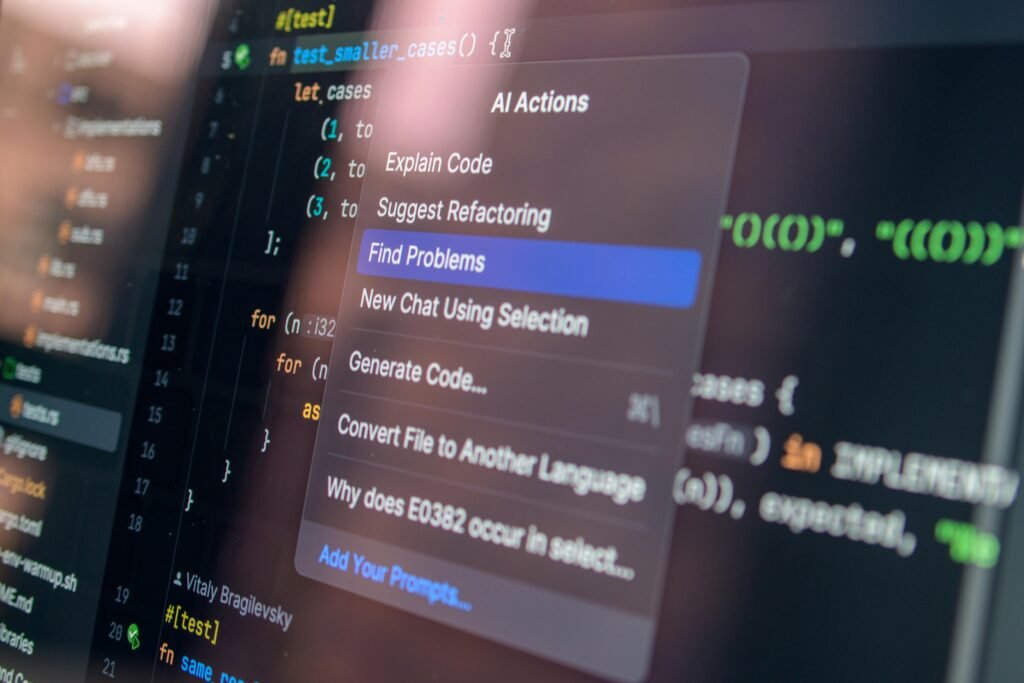
“Software engineering is changing, and we are entering a new period in coding history,” Cherny wrote in June 2025. He suggested the future of coding would be less about writing code and more about reviewing it.
That’s a significant mental shift. For decades, the job of a software engineer has centered on translating ideas into code. Type the logic. Debug the errors. Ship the feature. Repeat.
Cherny is describing something different. Engineers becoming directors rather than performers. You explain what needs to happen. The AI writes it. You review, approve, or redirect.
His argument is that code is no longer the bottleneck. Understanding what to build, how systems should work together, and what tradeoffs matter. That’s where humans add value now.
What Claude Opus 4.5 Can Do
Anthropic’s Claude Opus 4.5 scores 80.9% on SWE-bench Verified, can run autonomously for 30+ hours on a single task, and self-improves by refining its own capabilities across iterations.
The model behind this is Claude Opus 4.5, Anthropic’s flagship AI. It scores 80.9% on SWE-bench Verified, a benchmark that tests whether AI can solve real-world software engineering problems. That’s above the threshold where AI can resolve complex, real-world software issues with reliability that rivals senior human engineers. In some cases, it exceeds them.
The model can run autonomously for 30+ hours while maintaining focus on a single task. Anthropic added background mode to Claude Code, letting developers assign long-running tasks and walk away while Opus handles them independently.
Perhaps more notable is that Opus 4.5 can self-improve. In automation tests, agents using the model “autonomously refined their own capabilities, achieving peak performance in 4 iterations.” It monitors its own code for errors and can deploy patches without human intervention.
The Broader Picture
According to JetBrains’ 2025 Developer Survey, 85% of developers now use AI coding tools regularly, with GitHub Copilot alone reaching 15 million users across 90% of Fortune 100 companies.
Cherny’s claim exists in a larger context. According to JetBrains’ 2025 Developer Survey, 85% of developers now regularly use AI tools for coding. Nearly nine out of ten save at least an hour every week. One in five saves eight hours or more.
AI tools now write 41% of all code, according to industry statistics. GitHub Copilot alone has over 15 million users and is deployed at 90% of Fortune 100 companies. Other popular tools include Cursor, Windsurf, and Anthropic’s Claude Code.
GitHub’s research shows a 55% productivity improvement when developers use Copilot. Tasks that took 2 hours and 41 minutes without AI took 1 hour and 11 minutes with it.
The productivity gains are real. So are the job market implications.
The Part Nobody Wants to Talk About
A Stanford University study found employment among software developers aged 22 to 25 fell nearly 20% between 2022 and 2025, while Gartner predicts 80% of engineers will need to reskill by 2027.

A Stanford University study found that employment among software developers aged 22 to 25 fell nearly 20% between 2022 and 2025. That timeline coincides exactly with the rise of AI coding tools like GitHub Copilot, Cursor, and Claude Code.
Gartner predicts that 80% of software engineers will need to reskill by 2027 to fit into new roles. The job isn’t disappearing, but it’s transforming into something different.
AWS CEO Matt Garman raised a different concern about the talent pipeline. “If you have no junior people that you’re mentoring and bringing up through the company, at some point that whole thing explodes on itself,” he warned. If companies replace entry-level positions with AI agents, where do senior engineers come from in ten years?
I’ve written about the wave of AI-related layoffs hitting tech. This is the other side of that story. The capabilities driving those decisions.
The Skeptic’s View
GitClear’s research found AI-heavy projects saw 41% more bugs and 7.2% lower system stability, and 46% of developers say they don’t fully trust AI-generated code.
Not everyone is convinced the revolution is here. Almost half of all developers (46%) say they don’t fully trust AI-generated code. Only 3% “highly trust” it.
GitClear’s research found that projects relying heavily on AI saw 41% more bugs and a 7.2% drop in system stability. Code completion handles the easy stuff well. Complex system architecture and intricate refactors still require human judgment.
There’s also the context problem. As one CTO noted, “AI agents won’t have a human-level understanding of the intricate needs of each organization.” Code is the easy part. Understanding why code should be written a certain way (organizational history, technical debt, team preferences) is harder to automate.
It’s worth noting that Cherny works at Anthropic, building the tool he’s praising, using the model his company develops. That doesn’t make his claims false, but it does mean the endorsement isn’t exactly independent.
What Comes Next for Claude Code
Anthropic is exploring “Long running” autonomous tasks and “Swarm” capabilities where multiple Claude Code instances work together as product manager, developer, and QA with minimal human oversight.
At a recent Claude Code meetup in Tokyo, Cherny mentioned Anthropic is exploring “Long running” tasks and “Swarm” capabilities. The swarm concept involves multiple AI instances working together. One as product manager, one as developer, one as QA. All building software with minimal human oversight.
If that sounds like science fiction, remember that a year ago, an AI writing 259 pull requests in a month would have sounded the same.
Cherny’s milestone isn’t proof that human developers are obsolete. It’s proof that the ceiling for AI coding assistance is much higher than most people assumed. And it’s rising fast.
Questions About AI Coding
What is Claude Code?
Claude Code is Anthropic’s terminal-based AI coding tool. Unlike IDE plugins like GitHub Copilot or Cursor, it runs in your command line and can handle long-running autonomous tasks, multi-file refactoring, and complex software engineering work. It’s powered by Claude’s AI models, with Claude Opus 4.5 being the most capable option.
Can AI really replace software developers?
Not entirely, but roles are changing. AI excels at writing code but struggles with understanding organizational context, making architectural decisions, and handling novel problems. The job is shifting from writing code to reviewing AI-generated code and directing what should be built. Gartner predicts 80% of engineers will need to reskill by 2027.
How much code is AI writing today?
According to 2025 data, AI tools now write 41% of all code. 85% of developers use AI coding tools regularly. GitHub Copilot alone has 15 million users and is used at 90% of Fortune 100 companies.
Is AI-generated code trustworthy?
It depends. GitHub research shows Copilot-authored code contains 13.6% fewer errors per line than human-written code. However, GitClear found that projects relying too heavily on AI see 41% more bugs. Most developers (46%) say they don’t fully trust AI-generated outputs, and only 3% highly trust them.
The Bottom Line
An engineer built a tool, and then the tool built itself. For thirty days straight. That’s either the most impressive demo of AI capability in software development or the most alarming preview of where the industry is heading. Probably both.
The question isn’t whether AI will change software engineering. It already has. The question is how fast, and what we do about it.
Related Reading: AI Layoffs: 50,000 Jobs and 2026 Predictions | Browse AI news | New to AI? Start here








Leave a Reply