
DoorDash AI fake delivery scams are real. A driver in Austin used AI-generated photos to mark orders as delivered without ever leaving home. DoorDash permanently banned the driver and refunded affected customers. Here’s what happened and what it means for you.
I’ve had that moment where the app says “delivered” but there’s nothing at my door. Usually it’s the driver leaving it at the wrong apartment, or a neighbor grabbing it by mistake. But what happened to tech writer Byrne Hobart right after Christmas was something I’ve never seen before. And honestly, it’s making me look at those delivery confirmation photos a lot more carefully.
What Actually Happened
On December 27, 2025, a DoorDash driver in Austin accepted tech writer Byrne Hobart’s food order, immediately marked it as delivered without driving anywhere, and submitted an AI-generated photo of a DoorDash bag at a fake doorstep.
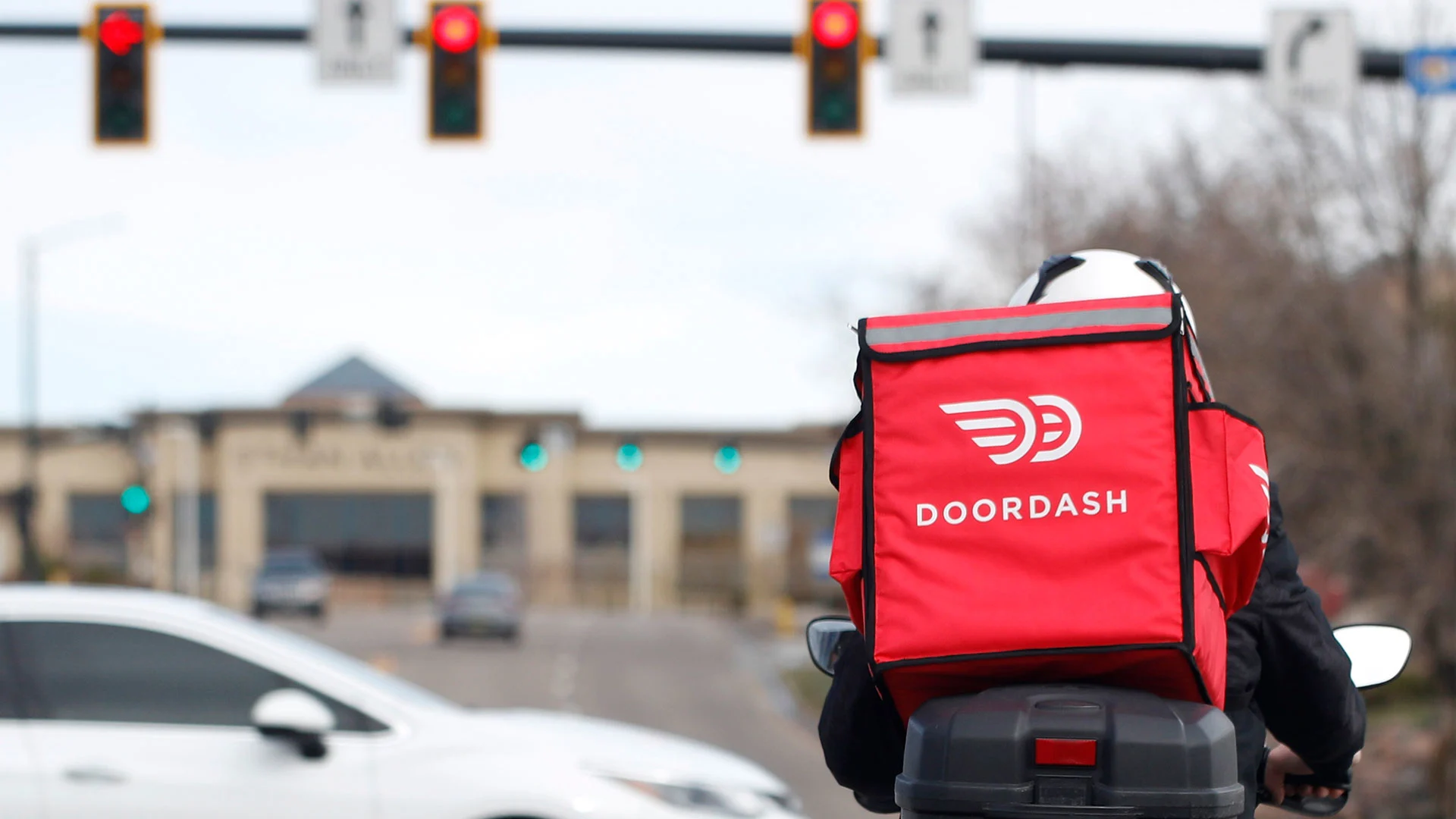
On December 27, 2025, Hobart ordered food through DoorDash at his home in Austin, Texas. A driver accepted the order and then, almost immediately, marked it as delivered. No drive to the restaurant. No drive to his house. Just instant “delivery.”
When Hobart checked the proof-of-delivery photo in the app, he saw a DoorDash bag sitting in front of a door. It looked plausible at first glance. But something was off.
The lighting was too uniform. Almost artificially perfect. The proportions of the bag and doorway seemed slightly skewed. And there were subtle artifacts in the image that didn’t match how real photos look. This wasn’t a photo of his door. It was an AI-generated image, likely created with a tool like DALL-E 3 or Midjourney.
Hobart posted a side-by-side comparison on X showing the fake photo next to his actual front door. “Amazing,” he wrote. “DoorDash driver accepted the drive, immediately marked it as delivered, and submitted an AI-generated image.”
Other Austin residents quickly replied. They’d experienced the same thing with the same driver.
How the DoorDash AI Fake Delivery Scam Worked
The scam combined four techniques. Account takeover of a legitimate driver, exploiting DoorDash’s historical delivery photos as AI reference images, generating fake photos with AI image tools, and GPS spoofing to fake the driver’s location.
This wasn’t some amateur hack. Security researchers who looked at the case identified a multi-step attack chain.
Step 1. Compromised driver account. The scammer likely took over a legitimate driver’s account. This is disturbingly common. About 20% of food delivery accounts on platforms like DoorDash, Uber Eats, and Grubhub experience takeover attempts each year, compared to just 2.5% for most other industries. Account takeover attacks in the restaurant space jumped 72% year-over-year.
Step 2. Exploited DoorDash’s historical photos. DoorDash has a feature that shows drivers previous delivery photos to the same address. This is meant to help legitimate drivers know where to leave packages. But it also gave the scammer reference images to feed into an AI image generator.
Step 3. Generated fake delivery photo. Using AI image generation tools like DALL-E 3, Midjourney, or Stable Diffusion, the scammer created a convincing photo of a DoorDash bag at what appeared to be the customer’s door. Modern AI can produce photorealistic scenes in seconds when given reference images.
Step 4. Spoofed GPS location. The final piece was making DoorDash’s system think the driver was actually at the delivery address. GPS spoofing apps can fake your location, so the “delivery” looked legitimate to DoorDash’s servers.
The result was the driver collected payment without ever moving. The customer got nothing but a fake photo and an empty doorstep.
This wasn’t a lazy scam. It combined account takeover, AI image generation, and GPS spoofing. The same techniques could target Uber Eats, Grubhub, and Instacart. Expect copycats.
The Bigger Problem: We Can’t Spot AI Fakes
Research shows only 0.1% of people can accurately identify AI-generated images, and deepfake-related fraud hit $12.5 billion in US losses in 2025 according to the FTC.
The part that really bothers me is this. Hobart caught this because he’s a tech writer who knows what AI artifacts look like. Most of us wouldn’t.
A recent study found that only 0.1% of people can accurately identify AI-generated content. That’s not a typo. Less than one in a thousand.
And it gets worse.
- 30% of adults aged 55-64 have never even heard of deepfakes
- Financial fraud losses in the US hit $12.5 billion in 2025 according to the FTC, up 25% from the previous year
- AI-powered deepfakes were involved in over 30% of high-impact corporate impersonation attacks in 2025
The tools that make our lives convenient are also making it easier for scammers to exploit us. And our eyes can no longer be trusted as the final check. If you want to understand more about how AI is shaping everyday life (both good and bad), our AI news section covers these developments regularly.
You probably can’t spot AI fakes reliably. Neither can I. The best defense isn’t trusting your eyes. It’s checking the delivery timeline. If it says “delivered” but the driver never actually drove anywhere, that’s your red flag.
What DoorDash Is Doing About It
DoorDash permanently banned the driver, issued full refunds with account credits to affected customers, and is now rolling out selfie verification, biometric matching through Persona, and AI-powered synthetic image detection.
DoorDash responded quickly once the story went viral. They investigated Hobart’s claim, confirmed the photo was AI-generated, and took action.
- Permanent ban. The driver’s account was permanently removed from the platform
- Full refunds. Affected customers got their money back plus account credits
- Zero tolerance policy. DoorDash emphasized they don’t mess around with fraud
But they’re also rolling out new security measures.
- Selfie verification. Drivers now must provide a selfie that matches their government ID
- Biometric partnership. They’re working with Persona, a third-party identity verification company, to do biometric matching
- Enhanced AI detection. Upgrading their fraud-detection algorithms to spot synthetic images generated by tools like DALL-E 3 and Midjourney
DoorDash acknowledged that “no system, however thorough or sophisticated, is perfect.” But they’re clearly taking this seriously.
DoorDash handled this well. Fast investigation, permanent ban, full refunds, and new security measures. This is what a responsible response looks like. Keep using the app, just stay aware.
What This Means for You
You don’t need to stop using DoorDash or Uber Eats, but checking the delivery timeline for impossible speed, comparing the confirmation photo to your actual door, and reporting suspicious orders immediately are now important habits.
Should you stop using food delivery apps? No. This was one driver caught quickly, and DoorDash responded appropriately. But it’s a reminder to pay attention.
Trust your gut. If a delivery seems impossibly fast, something might be wrong. Drivers can’t teleport.
Look at the photo. Does it actually look like your door? Check for weird lighting, strange proportions, or details that don’t match your actual home.
Report fast. If something seems off, report it immediately through the DoorDash app. The sooner you flag it, the sooner the platform can investigate.
Be specific in delivery instructions. Include apartment numbers, gate codes, and distinctive landmarks. This makes it harder for scammers and easier for you to spot fake photos.
DoorDash AI Fake Delivery: Common Questions
How can I tell if a delivery photo is AI-generated?
Look for unnatural, uniform lighting. Check if proportions seem off or if objects have strange shapes. Zoom in on details. You might spot weird textures or artifacts that don’t look right. The biggest tell is whether it actually looks like YOUR door.
What should I do if I suspect a fake delivery photo?
Contact DoorDash customer support immediately through the app. Provide all details of your order and a screenshot of the suspicious photo. Platforms take this seriously and will investigate.
Is it still safe to use DoorDash and other delivery apps?
Yes. DoorDash, Uber Eats, and Grubhub are all investing heavily in security, and incidents like this, while concerning, are caught and addressed quickly. The vast majority of deliveries happen exactly as they should. Just stay aware.
Could this happen with Uber Eats or Grubhub too?
Any platform using photo verification faces similar risks. The same attack chain (account takeover + AI image generation + GPS spoofing) could theoretically work on Uber Eats, Grubhub, or Instacart. All major platforms are likely watching this case closely and evaluating their own systems.
The Takeaway
This DoorDash AI fake delivery case is a preview of a bigger challenge we’re all going to face. As AI image generators like DALL-E 3, Midjourney, and Stable Diffusion get better at creating realistic images, our traditional ways of verifying things will keep getting challenged.
For now, the lesson is simple. Pay attention. Look at those delivery photos. And if something seems off, trust your instincts.
Related Reading: How AI Shopping Assistants Help You Make Better Decisions | Browse AI news | New to AI? Start here



Leave a Reply