

ℹ️ Quick Answer: ChatGPT ads in Europe went live on August 24, 2026, expanding OpenAI’s advertising to 31 new countries. Ads appear only on the Free and Go plans, sit below the answer with a sponsored label, and disappear on Plus and higher. OpenAI says advertisers never see your conversations and never buy your data.
📋 WHAT’S INSIDE
- What Changed on August 24
- Who Sees Ads (and What $8 Doesn’t Buy)
- What OpenAI Promises About Your Conversations
- How to Make the Ads Go Away
- FAQ: ChatGPT Ads in Europe
Last updated August 24, 2026
I run this blog without ads on purpose, so I pay attention when the most-used AI product on the planet moves the other direction. OpenAI started testing ads in ChatGPT back in February, and as of today that test has stopped looking like a test.
Starting August 24, ads are live in 31 European countries, from Germany and France to Sweden and Austria. Honestly, I get it. Very few AI companies are making money right now, if any of them are, so I’m not surprised to see new ways of earning income to keep the ships afloat. On a free plan, ads make sense. Where this rollout loses me is further down, and I’ll get to that.
What Changed on August 24

OpenAI announced the expansion on August 18, and the ads switch on across 31 European markets starting today. It is the company’s largest ads expansion so far, six months after the US pilot began.
The scale has grown fast. Since February, OpenAI added eight more markets, and it says tens of thousands of marketers have already advertised inside ChatGPT. European advertisers start out buying through OpenAI’s own sales team and agency partners, with self-serve access through Ads Manager planned for later this summer. The platform now supports conversion optimization, geo-targeting, and custom audiences, which is the same toolkit Google and Meta sell. I covered the original ads announcement when it landed, and everything since then has been expansion.
Who Sees Ads (and What $8 Doesn’t Buy)

Ads appear only on the Free and Go plans. Plus, Pro, Business, Enterprise, and Edu accounts stay ad-free, and OpenAI says accounts identified as belonging to people under 18 see no ads at all.
Go, the $8-a-month plan, raises your message, upload, and image limits roughly tenfold over Free, and it still shows you ads. This is the part I don’t like. A lot of companies are shifting toward this lower-price-with-ads middle tier, and I’m not a fan. Either you give me ads or you don’t. If I’m paying, I don’t think I should see ads, and $8 a month is paying. The cheapest genuinely ad-free ChatGPT is Plus at $20.
If you are weighing the tiers, I broke down what the free plan actually covers in an earlier post, and parents should know the under-18 rule works through the same age checks as the parental controls OpenAI shipped this month.
What OpenAI Promises About Your Conversations
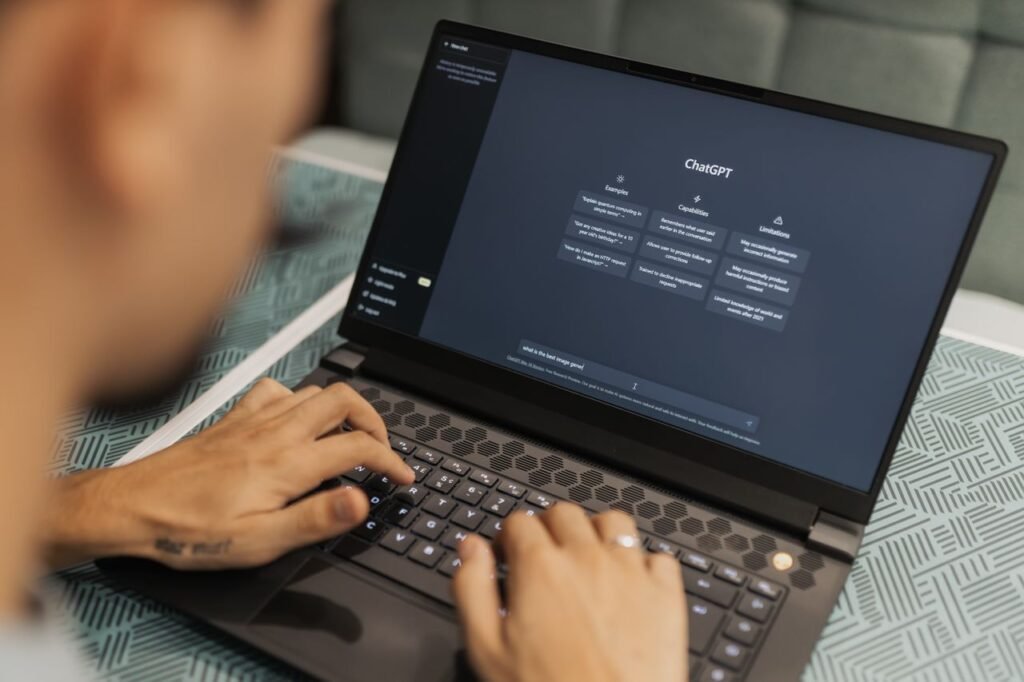
OpenAI’s stated ads principles are that conversations stay private from advertisers, customer data is never sold, ads are clearly labeled and kept separate from answers, and advertising does not influence what ChatGPT tells you.
Europe gets one extra layer of caution: personalized ads are off at launch in the EEA and Switzerland, so European free users will see contextual ads rather than ads built on a profile of them. Everyone else gets a personalization setting they can turn off. Those promises are in writing, and they come from a company that also says it is still developing new ad formats. Search engines started with clearly separated ads too, and twenty years of incentives reshaped that separation.
How to Make the Ads Go Away
There are only two real levers. Upgrade to Plus or higher, or stay on Free and turn off ad personalization in settings, which limits targeting without removing the ads themselves. No toggle removes ads entirely on Free or Go.
The third option is switching tools. Anthropic’s Claude shows no ads on its free tier as of this writing, and for plenty of everyday use the free tiers are interchangeable. For what it’s worth, a labeled ad under a free answer doesn’t bother me. Free has to get funded somehow, and I’d rather see a clearly marked sponsored box than have the answers quietly skewed. If the targeting bothers you more than the ads do, the personalization toggle is the setting that matters.
FAQ: ChatGPT Ads in Europe
Which countries are getting ChatGPT ads?
The August 24 expansion covers 31 European countries, including Germany, France, Spain, Italy, Sweden, Norway, Denmark, the Netherlands, and Austria. They join the United States, where the pilot began in February 2026, plus eight other markets OpenAI added over the past six months.
Does paying for ChatGPT remove the ads?
Only from Plus ($20 a month) upward. The $8 Go plan raises your usage limits about tenfold but still shows ads, so the cheapest genuinely ad-free ChatGPT is Plus. Business, Enterprise, and Edu accounts stay ad-free too.
Can advertisers read my ChatGPT conversations?
OpenAI says no. Its stated ads principles are that conversations stay private from advertisers, customer data is never sold, ads are clearly labeled below the answer, and advertising does not influence what ChatGPT tells you.
Free ChatGPT stays free because advertisers are paying for it now, and on a $0 plan that trade seems fair to me. Paying $8 and still seeing ads is the version I’d skip.
Related reading: ChatGPT Ads Are Coming: What Free Users Need to Know | Free ChatGPT Limits: What “Unlimited” Actually Covers | New to AI? Start here
WHO WROTE THIS
Moses Smith. I write Everyday AI for people who aren’t engineers. I go try the tools, then tell you honestly whether they were worth it. Sometimes the answer is no, and that’s kind of the point.
This blog is free and has no ads. If it saved you some time, you can buy me a coffee.



Leave a Reply