
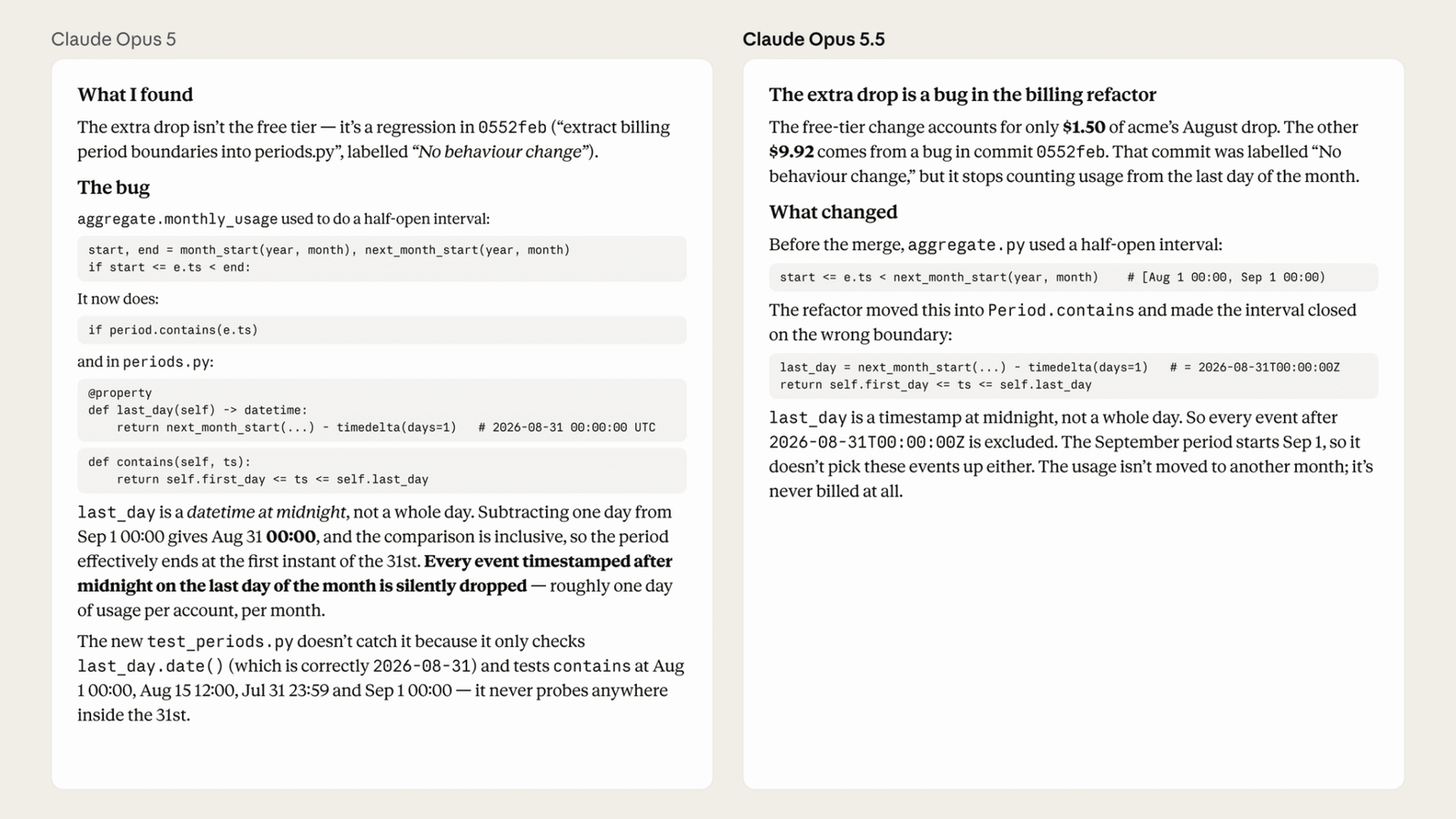
ℹ️ Quick Answer: If Claude writing has felt dense, Anthropic heard that too. It calls writing one of the most common areas of feedback on Opus 5, and engineer Jackson Kernion says, roughly, that training on math and code pulled Claude’s style away from people. Opus 5.5 has the first targeted fixes. Use a 5.5 model and add a plain-writing rule in Settings.
📋 WHAT’S INSIDE
- Is Claude writing getting worse?
- Why Claude writing got so dense
- Did Opus 5.5 fix it?
- Which Claude model to pick, and what to tell it
- What we still don’t know
- FAQ
Last updated October 5, 2026
Anthropic released Claude Opus 5.5 on September 22, and that same day Jackson Kernion, who worked on it, posted on X that he hasn’t “been as happy about a model’s writing since Opus 4.6,” which is four Opus releases back. He described what they were fixing as “overly-dense info dumps.”
If you mostly use Claude for emails and documents and that sounds familiar, here’s what he said happened, and there’s a setting that helps.
Is Claude writing getting worse?
Anthropic hasn’t said it got worse, but it does say writing was one of the things it heard about most with Opus 5, and the one outside measurement shows Opus 5.5 doing better. The Opus 5.5 announcement calls it “one of the most common areas of feedback we heard about Opus 5,” and says the new model “puts the most important information up front, is less likely to use jargon or idiosyncratic phrases, and follows the writing rules you give it.”
Kernion’s X bio says he does finetuning at Anthropic, which is part of how the models get trained, and he wrote that Opus 5.5 is the company’s first release with “targeted improvements on sentence clarity” and those info dumps. His profile also says his views are his own, so what follows is one engineer explaining it on X and not an official Anthropic statement.
This is a separate complaint from a model getting weaker in the weeks after launch, which I covered with GPT-6 Astra and Fable 5.
Why Claude writing got so dense
Kernion’s explanation is that training Claude harder on technical work pulls its writing away from people unless something pushes back. Someone asked him why Opus 4.6 sounded more natural, and he replied that there’s a combination of factors, but roughly, “as you train more against math and code and against the ability to explain technical topics to LLMs, you need to actively push back by rewarding simple explanations for human minds.”
An LLM is just the technical name for an AI model like Claude, so in other words, the more Claude got trained on math and code and on explaining things to other AI models, the more somebody had to reward it for explaining things simply to people.
In a later reply he called the style “Claudeish,” said it “was adapted to LLM psychology,” and added that “LLMs have way more working memory and take in details at a finer grain.” That’s a style built for a reader that can hold a lot more in its head at once than a person can.
Did Opus 5.5 fix it?
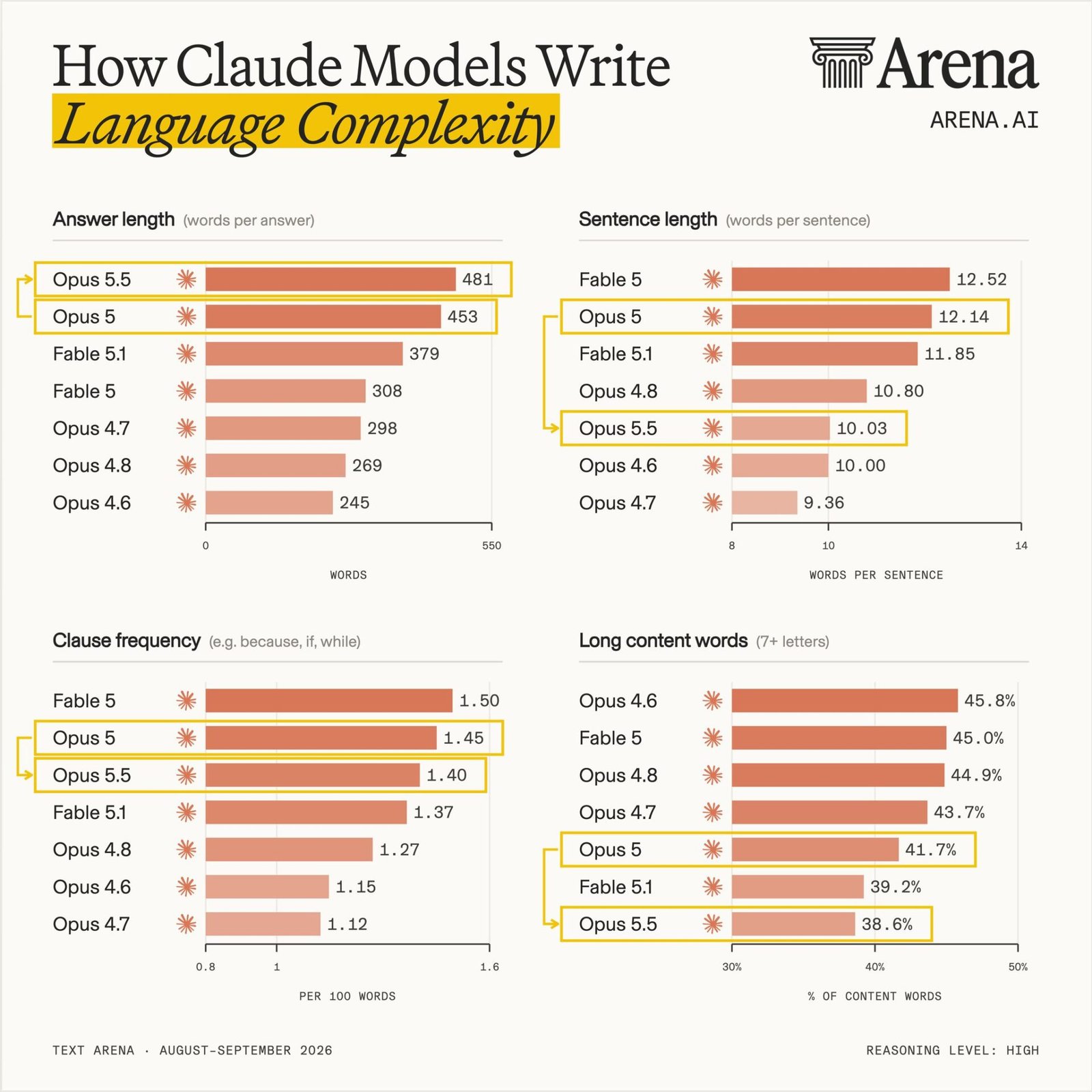
Some of it, going by the one outside measurement I could find. Arena, a site that tests AI models against each other, compared Opus 5.5’s answers with Opus 5’s and reported that “10 of 12 writing measures moved in a better direction.” Sentences got 17% shorter on average, and em dashes, the long dash that became a familiar tell of AI writing, dropped 95%.
The answers themselves got a little longer, though. Arena has Opus 5.5 averaging 481 words an answer, up from 453 for Opus 5, and its chart puts Opus 4.6 at 245. Sentence length is back to about where Opus 4.6 was, at 10 words, but each answer is roughly twice as long. Arena also found hedges like “perhaps” and “arguably” went from 0.39 to 0.77 per 1,000 words, which is still under one per answer.
Which Claude model to pick, and what to tell it

Going by what Anthropic says, use one of the 5.5 models and then give Claude your writing rules. Opus 5.5 is the one with the targeted writing work, and Anthropic says Sonnet 5.5 “writes more clearly than our previous generation of models” too. Developer Simon Willison reports Sonnet 5.5 is “now the model used for the free tier on claude.ai,” so on the free app you’re already on it. If you pay, open the model picker and check that it says Opus 5.5 or Sonnet 5.5.
Then tell it who it’s writing for. Anthropic’s help center says to click your initials in the lower left corner, select Settings, and fill in “Instructions for Claude,” which apply account-wide. You could paste in something like “Write for a general reader. Short sentences, no jargon, answer first, keep it brief.” Anthropic says following the writing rules you give it is one of the things Opus 5.5 got better at.
For me Opus 5.5 was a big jump. It feels smarter and faster, and it doesn’t use as much of my usage.
What we still don’t know
Kernion’s explanation is a few short replies on X where he called this “a hard problem to solve” and said “we’ll continue to make improvements,” and Anthropic hasn’t published how it measured the writing problem or what it changed in training. Arena’s numbers count words and punctuation in answers collected on its own site, and it only compared Opus models, so nobody outside Anthropic has measured Sonnet 5.5’s writing yet that I could find.
FAQ
Is Claude’s writing getting worse?
Anthropic says writing was one of the most common areas of feedback it heard about Opus 5. Anthropic engineer Jackson Kernion said he hadn’t been as happy about a model’s writing since Opus 4.6, and that Opus 5.5 is the first release with targeted fixes. Arena found Opus 5.5 improved on 10 of 12 writing measures compared with Opus 5.
Which Claude model is best for writing emails and documents?
Anthropic says Opus 5.5 and Sonnet 5.5 both write more clearly than its previous generation of models. Developer Simon Willison reports that Sonnet 5.5 runs the free tier on claude.ai.
How do I make Claude write more simply?
Click your initials in the lower left corner of Claude, select Settings, and add a rule under Instructions for Claude, such as asking for short sentences and no jargon.
The writing fixes are in the 5.5 models, and the engineer who worked on them says there’s more to do. If Claude still hands you an overly dense answer, tell it who it’s writing for.
Related reading: Claude Opus 5.5: what changes if you pay | Claude Sonnet 5.5 got smarter and cheaper | GPT-6 Astra got worse after launch | New to AI? Start here
WHO WROTE THIS
Moses Smith. I write Everyday AI for people who aren’t engineers. I go try the tools, then tell you honestly whether they were worth it. Sometimes the answer is no, and that’s kind of the point.
This blog is free and has no ads. If it saved you some time, you can buy me a coffee.






Leave a Reply