

ℹ️ Quick Answer: AI electricity prices are real but wildly uneven. US residential power averaged 17.30 cents per kilowatt-hour in 2025 and hit 18.44 cents by May 2026. In the PJM grid region a capacity auction has already locked in $25 to $30 a month extra for a typical household. Where you live decides how much of the data center bill lands on you.
📋 WHAT’S INSIDE
- What Is Actually Happening
- AI Electricity Prices: What Your Bill Actually Shows
- Who Pays Is Decided by a Rule You’ve Never Read
- Your Next Laptop Costs More, and Here’s Why
- The Honest Part: How Much of This Is Really AI?
- What You Can Actually Do About It
- Common Questions About AI and Rising Prices
Last updated August 20, 2026
AI electricity prices are not a phrase I expected to be writing about, but here we are. I’ve spent months writing about what AI can do for you. Today I want to talk about what it’s doing to you, specifically to your bank account, because there’s a story running in the business pages that nobody is bothering to translate into English.
Here’s the short version. The AI boom is being built with real concrete, real chips, and real electricity, and somebody has to pay for all of it. That somebody is partly you, and it’s showing up in two bills you already open every month.
I wrote the first version of this in July. I’m updating it because Ohio, Virginia, and now Pennsylvania have each rewritten the rules for who has to pay when a data center shows up, and Pennsylvania signed its version two days ago.
What Is Actually Happening
Tech companies are spending more than $700 billion on data centers this year. Alphabet, Amazon, Meta, and Microsoft alone account for roughly $720 billion in capital investment, most of it on the buildings and chips that run AI.
That number is so large it stops meaning anything, so here’s a way to feel it. The International Energy Agency reckons a single hyperscale data center can pull around 100 megawatts, about what 100,000 homes use. That’s the low end. Meta’s Hyperion project in Louisiana is planned for at least 5 gigawatts, which is roughly three times the electricity consumption of the entire city of New Orleans.
Those buildings need two things in enormous quantities: memory chips and electricity. You buy those same two things. That’s the whole story. When a handful of the richest companies on earth start bidding for the same supply you’re bidding for, you lose.
AI Electricity Prices: What Your Bill Actually Shows
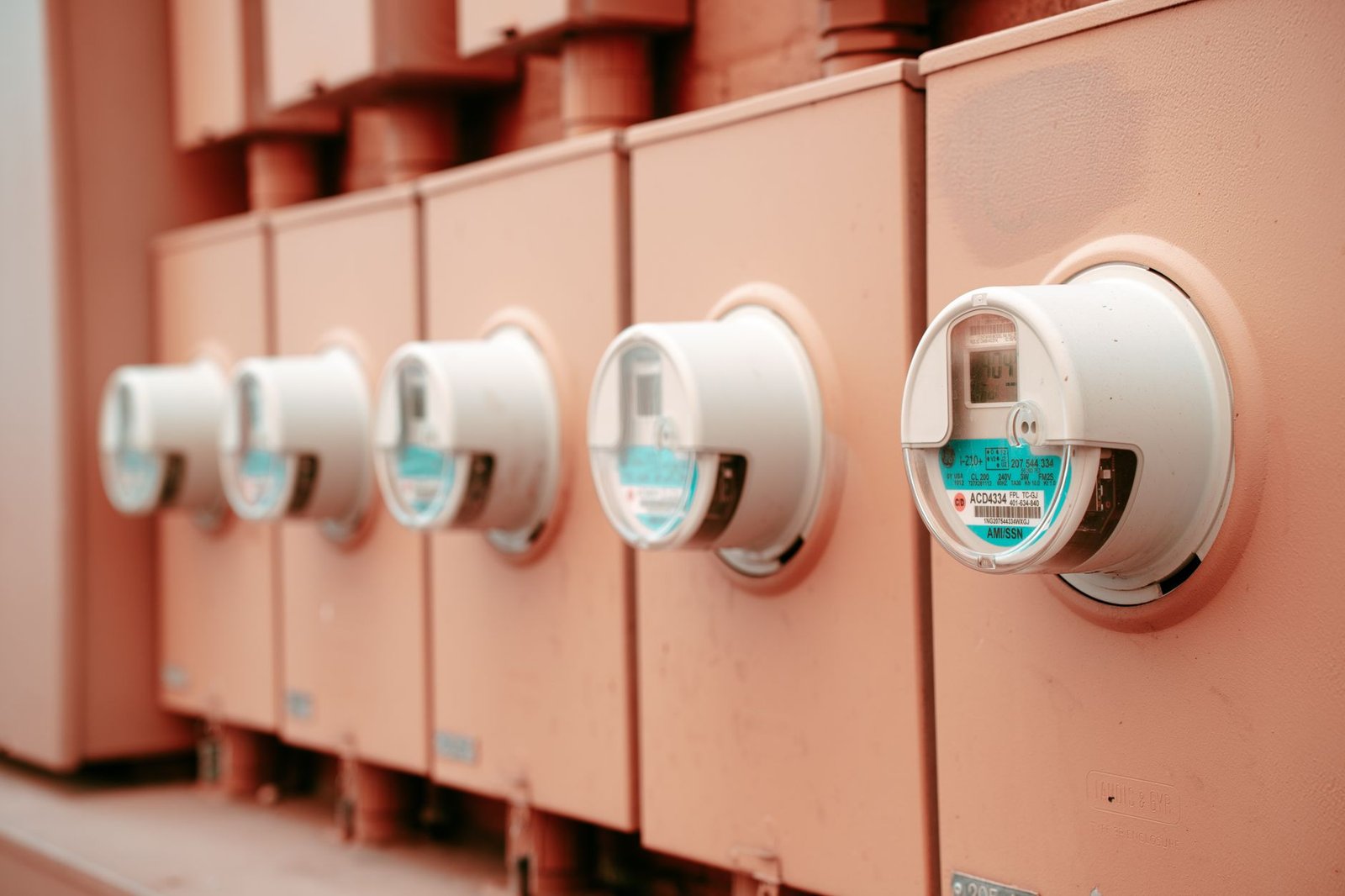
Power is going up, data centers are one real reason among several, and how big a reason depends almost entirely on which grid your house is attached to.
Start with the national picture, because it’s the least dramatic part. The Energy Information Administration puts the average US residential price at 17.30 cents per kilowatt-hour for 2025, up from 16.48 the year before, and the May 2026 reading came in at 18.44 cents. Go back to 2021 and the average was 13.66 cents, so we’re looking at about 27% in four years. Goldman Sachs expects roughly 6% annual increases through 2027 before it eases to around 3% in 2028.
That average smooths over the thing you actually feel, which is your region. PJM is the grid operator for 67 million people from Illinois across to New Jersey and down through Virginia, and it buys future generating capacity at a yearly auction. Capacity cost $29 per megawatt-day for the 2024/25 period. For 2025/26 it jumped to $270, and the 2026/27 auction cleared at $329, which works out to about $16 billion in total capacity payments.
Run that through a typical PJM household at 880 kilowatt-hours a month and you get roughly $30 a month. The auction has already cleared, so this isn’t a forecast. If you live in PJM territory you are paying $25 to $30 more per month than you were two years ago, and you will keep paying it.
Northern Virginia is where this gets extreme. It holds the largest concentration of data centers in the country, and the state’s own reporting to the legislature is where you can watch that load pile up. Lawrence Berkeley National Laboratory projects that data centers could consume 12% of all US electricity by 2028. Virginia got there early.
Who Pays Is Decided by a Rule You’ve Never Read
A data center needs the same amount of power no matter which state it lands in. Whether that cost shows up on your bill or the company’s gets decided in a utility rate case, and those happen quietly.
The default answer is that you pay. Ari Peskoe, who directs the Electricity Law Initiative at Harvard Law School, put it to Consumer Reports about as plainly as it can be put: “Utilities are building infrastructure, and then we all pay for it because that’s how the utility business model has always worked.” A utility spends billions on substations and transmission lines for a data center that may or may not get built, and unless somebody writes a rule saying otherwise, that spending goes into everybody’s rates.
Ohio wrote the rule first. Its data center tariff, approved in July 2025, covers projects of at least 25 megawatts and makes them stand behind their own forecast. Pay for most of the capacity you reserve whether you use it or not, commit for the ramp period plus at least eight years, post collateral if your credit is shaky, and either reimburse the buildout or pay an exit fee on the way out. AEP says more than 30 gigawatts of preliminary interest narrowed to about 13 gigawatts willing to pay for engineering studies and 5.6 gigawatts that actually signed. Another 12.2 gigawatts had signed before the tariff, so it isn’t as clean as 30 down to 5.6, though the drop once real money was required is hard to miss.
Virginia followed with a new GS-5 rate class that takes effect in January 2027. Same 25-megawatt threshold, a 14-year commitment for new qualifying customers, and a requirement to pay for at least 85% of contracted transmission and distribution demand and 60% of generation, used or not.
Then Pennsylvania went further. On August 18 Governor Josh Shapiro signed Executive Order 2026-05, which makes a set of standards called the GRID Requirements binding on any data center project that wants a state permit. Developers have to bring their own generation, pay for the infrastructure needed to serve their demand, and get local approval before the Department of Environmental Protection will even look at the application. The order also pulls AI data center proposals out of the state’s Fast Track permitting program and bans nondisclosure agreements on these projects. The state says more than 100 data center proposals are floating around Pennsylvania and most of them are speculative, with no financing and no tech company signed up to use the space.
None of this is settled. The Ohio Manufacturers’ Association has appealed the Ohio tariff, and its president Ryan Augsburger framed the worry in one line that applies to every state on this list: “Customers are being asked to pay for a future that may never arrive.”
ℹ️ Worth knowing: a big committed customer can actually lower everyone’s rates by spreading a utility’s fixed costs across more electricity. That only holds if the customer pays for its own infrastructure and the other ratepayers are protected when it walks away. That’s exactly what these tariffs are arguing about.
Your Next Laptop Costs More, and Here’s Why

Memory chips are the bottleneck, AI is eating them, and the price of the computer you were about to buy went up because of it.
Three companies, Samsung, SK Hynix, and Micron, make more than 95% of the world’s DRAM. All three have been shifting their factories away from the ordinary memory that goes in your laptop and toward the high-bandwidth memory that AI accelerators need, because that’s where the money is. Same factories, different customer, and you are not the customer they care about.
The result: RAM prices are up around 89% this year, with some estimates putting the total surge far higher, and analysts expect another 40 to 50% in the third quarter and 30% more in the fourth.
You can see it in real products already. A MacBook that was $1,699 is now $1,999. Apple laptops and iPads went up 15 to 25%. Microsoft raised the Xbox by $100 in August. None of those companies are going to put “because of AI” on the price tag, but that’s what it is. Graphics cards have taken the worst of it, which I broke down separately in what AI did to GPU prices in 2026.
⚠️ If you were planning to buy a computer: prices are forecast to keep climbing through the end of 2026. If you need one anyway, sooner is likely cheaper than later. If you don’t need one, this is a fine year to make the old one last.
The Honest Part: How Much of This Is Really AI?
The memory story is airtight. Chip supply is being physically reallocated to AI, and that is unambiguously why your RAM costs more. Nobody disputes that.
The electricity story is messier. Fact-checkers and energy researchers who’ve dug into it, including analysts at Rutgers, have found that data centers are not yet the main driver of most people’s power bills. Aging grid infrastructure, transmission upgrades, extreme weather, and plain old utility rate hikes were pushing electricity up before AI showed up. Data centers are pouring fuel on a fire that was already burning, and in some places they’ve actually spread the fixed costs across more customers and pushed bills slightly down, at least for now.
So if someone tells you AI is the reason your power bill doubled, they’re overselling it. If someone tells you AI has nothing to do with it, they’re not looking at the PJM capacity auction. The truth is the boring middle: AI is a real and growing pressure on a system that was already straining, and it hits some ZIP codes far harder than others.
Fed Chair Kevin Warsh has said flatly that “AI investment is now boosting demand.” Economists expect the buildout to add about half a percentage point to core inflation by year end, and core inflation is already running at 3.4%, above the Fed’s 2% target. Which means the Fed may raise interest rates to cool it down. If that happens, AI won’t just be on your electric bill and your laptop. It’ll be on your mortgage.
What You Can Actually Do About It

You can’t opt out of a global chip shortage, but you can stop paying more than you need to. Four things worth doing this year.
Find out what your utility’s data center rules are. This is the newest and most useful one, and it takes about five minutes. Get your utility’s name off your bill and search three things: “[utility name] data center tariff,” “[utility name] large-load rate,” and “[your state] utility commission pending rate case.” You’re looking for a separate rate class for very large customers, with minimum contracts and exit fees attached. If there isn’t one, the cost of the next speculative project in your state has a decent chance of landing in your rates. Rate cases have public comment periods and almost nobody uses them.
Go look at your electricity plan. Seriously. Most people have never once checked whether they’re on the right rate, and in deregulated states you can often switch suppliers in ten minutes. That single boring afternoon will save you more money than any AI tool I’ve ever recommended.
Buy the computer now or not at all. If a machine is on your list for the next twelve months, the price curve is pointing up, not down. If it isn’t on your list, don’t let the panic put it there.
Buy less memory than the salesperson wants you to. Memory is exactly what’s inflated. Most people genuinely do not need the RAM upgrade they’re being upsold, and that upgrade is where the price gouging lands hardest right now.
There is irony that I’m currently sitting with as we speak. The AI tools I write about, the ones that genuinely make your life easier, are the same machines running up the bill. If you want the honest version of what these tools are actually worth paying for, that’s what my whole 2026 AI assistant stack breakdown is about.
Common Questions About AI and Rising Prices
Is AI really making my electricity more expensive?
Partly, and it depends heavily on where you live. The US residential average was 17.30 cents per kilowatt-hour in 2025 and 18.44 cents in May 2026, up about 27% since 2021. In the PJM region, covering 67 million people, capacity auction prices went from $29 per megawatt-day to $329 in two years, which works out to roughly $25 to $30 a month per household. Fact-checkers still find data centers are not the main driver nationally, since aging grid infrastructure and utility rate hikes were already pushing bills up.
Do data centers have to pay for the power lines they need?
That depends on your state. Ohio approved a data center tariff in July 2025 requiring projects over 25 megawatts to pay for most reserved capacity used or not, commit for at least eight years, and post collateral. Virginia’s GS-5 rate class starts in January 2027 with a 14-year commitment. Pennsylvania’s Executive Order 2026-05, signed August 18 2026, requires developers to bring their own generation and secure local approval. In states without such a rule, utility buildout costs typically flow into everyone’s rates.
Why are laptop and RAM prices going up in 2026?
Because AI is eating the memory supply. Samsung, SK Hynix and Micron make over 95% of the world’s DRAM, and all three have shifted production away from consumer memory toward the high-bandwidth memory AI accelerators need. RAM prices are up roughly 89% this year, with analysts forecasting another 40 to 50% in Q3 and 30% more in Q4.
Should I buy a laptop now or wait for prices to drop?
If you need one within the next year, buying sooner is likely cheaper than waiting, because memory prices are forecast to keep climbing through the end of 2026. If you don’t need one, this is a good year to make your current machine last. Buy less RAM than you’re upsold, since that’s exactly where the inflation is concentrated.
Will the AI buildout affect interest rates?
It might. Economists expect AI investment to add roughly half a percentage point to core inflation by the end of 2026, and core inflation is already at 3.4%, above the Fed’s 2% target. Fed Chair Kevin Warsh has said AI investment is now boosting demand, and the Fed may raise rates to cool it, which would show up in mortgages and loans.
None of this means you should be angry at AI, or stop using it. AI electricity prices are a real cost, not a reason to panic. It does mean you should know what it costs, and that the cost isn’t only the twenty bucks a month you pay OpenAI. Go check your electricity plan, and while you’re in there, go find out whether your state made anyone else pay for the grid.
Related reading: What AI Did to GPU Prices | The 2026 AI Assistant Stack | What Is the AI Bubble? | New to AI? Start here
WHO WROTE THIS
Moses Smith. I write Everyday AI for people who aren’t engineers. I go try the tools, then tell you honestly whether they were worth it. Sometimes the answer is no, and that’s kind of the point.
This blog is free and has no ads. If it saved you some time, you can buy me a coffee.







Leave a Reply