
ℹ️ Quick Answer. Is the OpenAI bubble real? The company spends $3.30 to earn every dollar of revenue, lost roughly $17 billion in 2026, and could run out of cash by mid 2027 according to financial analysts. But OpenAI also has 800 million weekly users, Microsoft backing, and a shot at building AGI. The truth is messier than the headlines suggest.
📋 WHAT’S INSIDE
- The OpenAI Bubble Numbers Everyone’s Talking About
- Why the OpenAI Bubble Competition Problem Is Serious
- The Contrarian Case Against the OpenAI Bubble Narrative
- OpenAI Bubble? These Numbers Tell a Different Story
- What History Tells Us About the OpenAI Bubble
- My Honest Take on the OpenAI Bubble
- What the OpenAI Bubble Means for Regular AI Users
- FAQ About the OpenAI Bubble
The OpenAI bubble is the headline I keep seeing everywhere. My LinkedIn feed. Reddit threads. Tech Twitter. Everyone seems convinced that 2026 is the year OpenAI finally collapses.
So I dug into the numbers. Is the OpenAI bubble about to burst? Or is this just the typical tech media doom cycle?
Full disclosure. ChatGPT was my first serious AI tool. It opened the door for someone like me who’d been curious about AI but never found a good entry point. I have real affection for companies that usher in new waves of technology.
But I also know history. When GUIs first appeared, Xerox was the pioneer. Then Microsoft came along and dominated for decades. Xerox invented the future. Microsoft owned it. Could the same thing happen to OpenAI?
The OpenAI Bubble Numbers Everyone’s Talking About
HSBC projects a cumulative $207 billion funding shortfall through 2030, Microsoft’s quarterly filing implies roughly $46 billion in annualized losses, and financial journalist Sebastian Mallaby estimates OpenAI could run out of cash by mid 2027.
The numbers are alarming if you take them at face value.
HSBC released an analysis in November 2025 concluding OpenAI won’t achieve profitability by 2030, with a cumulative funding shortfall of $207 billion through that year.
Microsoft’s quarterly filing revealed their OpenAI stake experienced a $3.1 billion decrease in net income. Since Microsoft holds 27%, that’s roughly $11.5 billion in quarterly losses for OpenAI. Annualized: $46 billion in losses against $20 billion in revenue.
The math is brutal. OpenAI spends $3.30 to make every $1.00.
Sebastian Mallaby, a financial journalist who’s covered tech bubbles for decades, concluded the company could run out of cash by mid 2027. Not because AI will fail, but because the economics might not justify the astronomical capital requirements.
⚠️ The Core Problem. OpenAI pays Nvidia’s margin on GPUs, then Microsoft’s margin on cloud infrastructure, then its own operating costs. Google trains Gemini on its own chips and pays only electricity. That structural disadvantage doesn’t go away with scale.
Why the OpenAI Bubble Competition Problem Is Serious
OpenAI’s enterprise market share dropped from 50% in 2023 to 27% by end of 2025, while Anthropic surged to 40% and Google’s Gemini captured 21%, according to Menlo Ventures’ State of Generative AI report.
OpenAI’s enterprise market share collapsed. In 2023, they owned 50% of the enterprise AI market. By the end of 2025, that dropped to 27%.
According to Menlo Ventures’ State of Generative AI report, Anthropic now leads with 40%. Google’s Gemini sits at 21%. The company that started the generative AI revolution is now third place for business customers, and enterprise contracts are where the real money lives.
Salesforce CEO Marc Benioff publicly announced he was switching from ChatGPT to Google’s Gemini 3 after using it daily for three years. When executives that visible defect, it signals something deeper.
Then there’s open source. DeepSeek released models in January 2025 matching frontier performance at a fraction of the cost. Training for DeepSeek V3: around $5.6 million. OpenAI’s frontier models: over $100 million.
MIT research found open source models now handle about 20% of all AI tokens processed, with optimal reallocation potentially saving $25 billion annually. Why pay more when alternatives keep closing the gap?
The Contrarian Case Against the OpenAI Bubble Narrative
OpenAI’s massive burn rate may actually function as a moat, since setting table stakes at $10 billion in annual compute effectively eliminates 99.9% of potential competitors, similar to how Amazon’s decade of losses built infrastructure no rival could replicate.
Everything above sounds like a company headed for disaster. But something nags at me.
I remember when analysts screamed about Amazon’s losses. They burned cash for two decades building logistics infrastructure. Today they’re worth $2 trillion.
There’s an argument that OpenAI’s burn rate isn’t a bug. It’s a feature. By setting table stakes at “$10 billion in compute per year,” they effectively ban 99.9% of competitors. If training a frontier model cost $50 million, dozens of startups would be nipping at their heels. At $5 billion? Only sovereign wealth funds and hyperscalers can play. The massive spending might actually be a moat.
There’s also valuation psychology. At $200 billion, OpenAI is too big for Microsoft to simply acquire. At $20 billion, Microsoft would swallow them whole. The valuation itself becomes a defensive weapon.
OpenAI Bubble? These Numbers Tell a Different Story
ChatGPT hit 800 million weekly active users with minimal marketing, revenue grew 10x in two years to $20 billion, and Sam Altman publicly stated OpenAI now knows how to build AGI as traditionally understood.
While everyone focuses on losses, the pessimists aren’t talking about the other side of the ledger.
ChatGPT has 800 million weekly active users. More than Google had at its IPO. OpenAI achieved this without significant marketing spend.
Revenue grew from $2 billion (2023) to $6 billion (2024) to $20 billion (2025). That 10x growth over two years outpaces Netflix, Amazon, Nvidia, Meta, Tesla, and Google at comparable scale. OpenAI now serves over 1 million business customers, with Enterprise adoption up ninefold year over year.
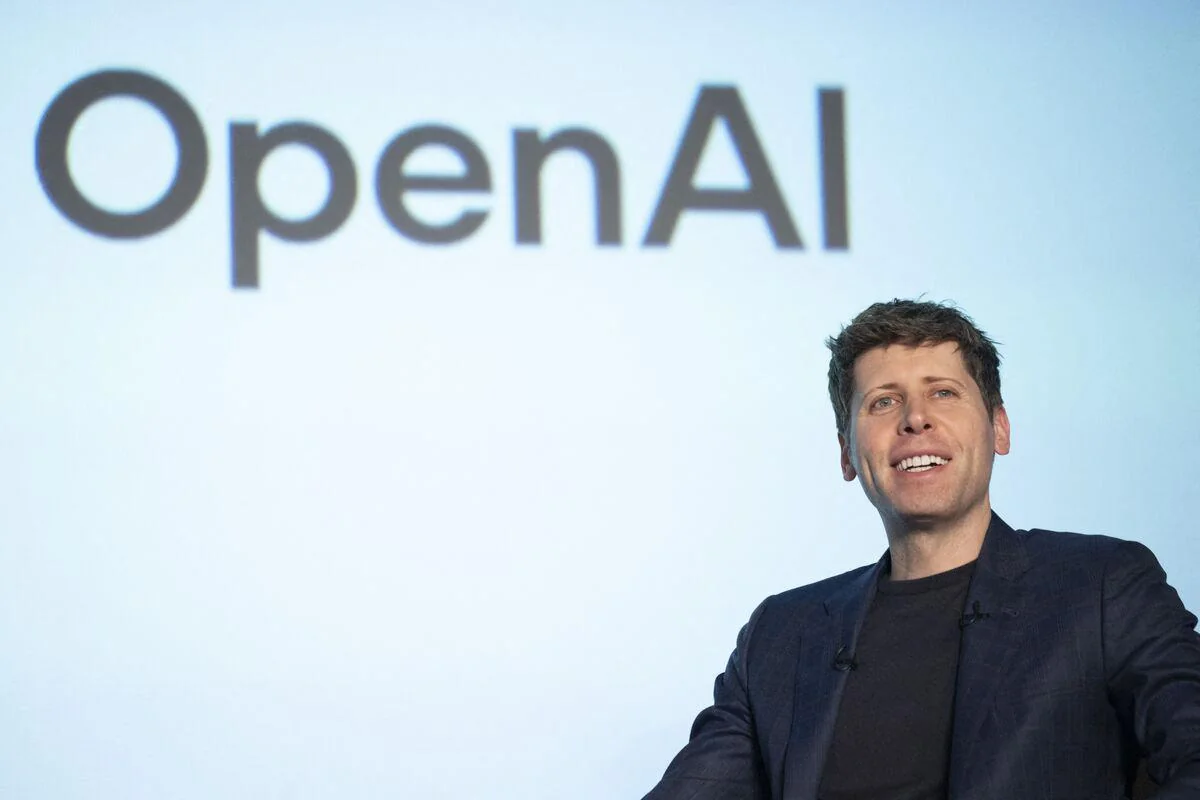
Sam Altman recently stated in a blog post that “we are now confident we know how to build AGI as we have traditionally understood it.” If true, current infrastructure investments would look cheap in retrospect.
Goldman Sachs estimates generative AI could raise global GDP by 7%, nearly $7 trillion in value. If OpenAI captures even a fraction, the current burn rate becomes a rounding error.
What History Tells Us About the OpenAI Bubble
The Richmond Federal Reserve compared the AI boom to the 1990s telecom buildout, but the critical difference is that today’s wave is bankrolled by cash rich giants like Microsoft, Amazon, Google, and Meta rather than fragile startups.
The Richmond Federal Reserve compared the current AI boom to the 1990s telecom buildout. Striking similarities: rapid advancement, investment competition, massive capital commitments ahead of proven demand. The telecom boom eventually produced returns, but not for everyone, and often with significant delays.
The dot com bubble offers another comparison. Revolutionary technology. Extraordinary valuations. Unproven business models.
The critical difference, though. The dot com bubble was financed by startups with no cash generation. Today’s AI wave is backed by Microsoft, Amazon, Google, and Meta. These companies generate enormous cash flows. They can afford to wait for returns in ways 1999 startups could not. That doesn’t guarantee OpenAI’s success, but it changes the failure dynamics significantly.
My Honest Take on the OpenAI Bubble
The “OpenAI bubble about to burst” narrative oversimplifies a company with 800 million users and $20 billion in revenue, but the structural cost disadvantage against vertically integrated competitors like Google remains a genuine threat.
OpenAI has real problems. The cost structure is concerning. Enterprise market share erosion is alarming. Competition from vertically integrated players is a structural disadvantage.
“OpenAI bubble about to burst” feels too simple. This isn’t Pets.com. OpenAI has 800 million users, $20 billion in revenue, and technology that works. The question isn’t whether AI is valuable. It’s whether OpenAI can capture enough value to justify its valuation.
Could Anthropic or Google be the Microsoft to OpenAI’s Xerox? Maybe. But Microsoft didn’t win because Xerox ran out of money. They won on distribution and business model. That’s a different threat than “running out of cash.”
Betting on OpenAI’s failure means betting against 800 million users, Microsoft’s support, and the possibility AGI is closer than skeptics believe. Betting on success means betting a company losing $17 billion annually can close a structural cost gap against competitors who don’t have that problem.
I don’t know which bet is right. Anyone who tells you they do is selling something.
What the OpenAI Bubble Means for Regular AI Users
For everyday ChatGPT users, OpenAI’s financial situation changes nothing right now. The service works, and alternatives like Anthropic’s Claude and Google’s Gemini are worth knowing as backup options.

If you’re using ChatGPT for everyday tasks, none of this matters right now. The service works. Whether OpenAI is profitable in 2030 doesn’t change what it can do for you today.
But having a backup plan makes sense. Claude from Anthropic and Google’s Gemini are legitimate alternatives worth knowing.
The AI revolution isn’t going away regardless of what happens to any single company. The technology works. The productivity gains are real. For regular users, who owns the infrastructure might not matter much at all.
FAQ About the OpenAI Bubble
Is OpenAI actually profitable?
No. OpenAI lost approximately $17 billion in 2026 and isn’t projected to achieve profitability until 2030 at the earliest. The company spends $3.30 for every $1.00 in revenue.
Could OpenAI actually run out of money?
Financial analysts including Sebastian Mallaby suggest OpenAI could run out of cash by mid 2027 without additional funding. Microsoft has indicated it won’t let its AI investment fail, though, providing a significant backstop.
Is ChatGPT going to disappear?
Unlikely. Even if OpenAI faces financial difficulties, with 800 million weekly users and Microsoft backing, restructuring or acquisition would be more likely than shutdown.
Should I switch from ChatGPT to Claude or Gemini?
No urgent need, but familiarity with alternatives makes sense. Claude and Gemini are both capable. According to Menlo Ventures, Anthropic leads enterprise with 40% share.
Related Reading
If you’re new to AI tools, check out our Start Here page. For more on using Claude without coding, see 5 Ways to Use Claude Code Without Writing a Single Line of Code. And for AI career opportunities, check out Top 5 AI Jobs 2026.


Leave a Reply